Key takeaways:
- Incorporating pickleball-specific workouts, such as agility drills and strength training, can significantly enhance on-court performance and reduce injury risk.
- Dynamic warm-up routines and targeted exercises improve reaction time, footwork, and overall athleticism, giving players a competitive edge during matches.
- Performance-ready apparel and footwear, like PB5star's specialized gear, support intense training sessions and ensure players can focus on their game without distractions.
Maintaining muscle mass as you age can reduce your risk of injury by up to 60 percent, a statistic that takes on even greater importance when you think about the physical demands of competitive play. For serious pickleball players, this is not just about general health. It can be the deciding factor between dominating the court and spending the season on the sidelines. While many players put all their focus on perfecting shots like the third shot drop or mastering the kitchen game, the most successful athletes know that the work they do off the court is just as important. The explosive lateral movements, quick changes in direction, and long rallies that define high-level pickleball all depend on a foundation of strength, agility, and endurance built through dedicated training.
The most effective pickleball workouts are designed with the sport’s unique demands in mind, combining strength circuits with agility drills that directly improve your ability to cover the court and finish points with power. This type of targeted training builds the athletic foundation that turns good players into great ones. Wearing performance-ready training apparel and court shoes that support your hardest sessions can elevate both your preparation and your results. At PB5star, our gear is designed to help you train with purpose and play at your best, so let’s break down the most effective fitness strategies to sharpen your competitive edge.

Why pickleball-specific workouts matter
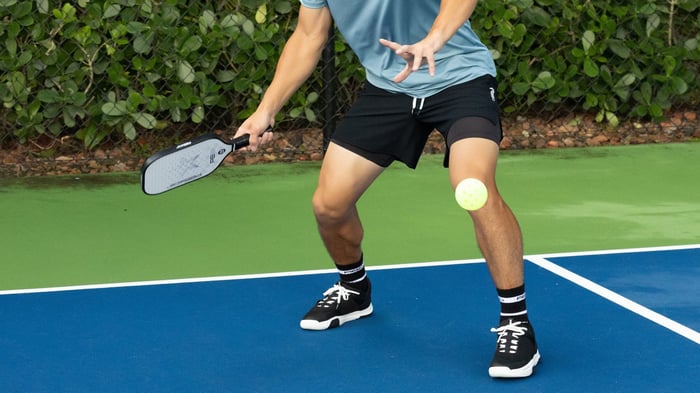
Pickleball demands a rare mix of explosive lateral movement, quick changes in direction, and sustained balance that sets it apart from other racquet sports. Signature movements like the split-step at the kitchen line, fast shuffles to cover the court, and powerful cross-court drives engage muscles in ways most traditional fitness routines never touch. Players who add strength training to their regimen have reported up to a 30 percent increase in shot power, proving how targeted conditioning can directly improve on-court performance. These specialized movement patterns require more than general fitness. They call for precise neuromuscular coordination so you can react in a split second during high-intensity rallies.
Sports science research shows that training programs designed for a specific sport produce better results than generic workouts, especially when it comes to improving performance and preventing injuries. In pickleball, focused conditioning can reduce the risk of common problems like wrist strains and elbow tendinitis by strengthening the exact muscles that absorb the repetitive impact of paddle play. The most effective programs mirror the sport’s unique demands: quick bursts of speed, sustained rallies that test endurance, and rotational strength for powerful shots.
Being prepared at this level means you can contribute more to your team, maintain consistency across tournament matches, and recover faster between games. The gear you train in also matters. Performance-ready apparel that moves with your body during lateral drills, moisture-wicking fabrics for high-intensity intervals, and supportive footwear for agility work all make a difference. The right foundation allows you to train without distraction and carry that confidence straight into match play.
Best footwork drills for pickleball agility
Mastering court coverage is about more than knowing where to stand. It takes quick, adaptable footwork that can respond to any shot your opponent sends your way. The best footwork drills for pickleball are designed to build explosive lateral movement and sharpen reaction time through sport-specific patterns. You can complete most of these in just 15 to 20 minutes, making them ideal for busy players who want maximum results in minimal time.
- Agility ladder circuits: Practice side shuffles, in-and-out steps, and crossover patterns to develop the explosive movement you’ll rely on during rallies.
- Cone drill formations: Arrange cones in T or diamond patterns, then sprint between them using shuffle steps and crossover moves to improve agility, reaction time, and shot placement.
- Split-step timing: Jump lightly into a ready position just as your partner strikes the ball to improve reaction speed and court positioning.
- Wall drill combinations: Hit groundstrokes and drop shots against a wall to refine agility and shot control, perfect for solo training.
- Dynamic movement with rebounders: Use a rebounder to simulate rally conditions and build muscle memory for quick coverage.
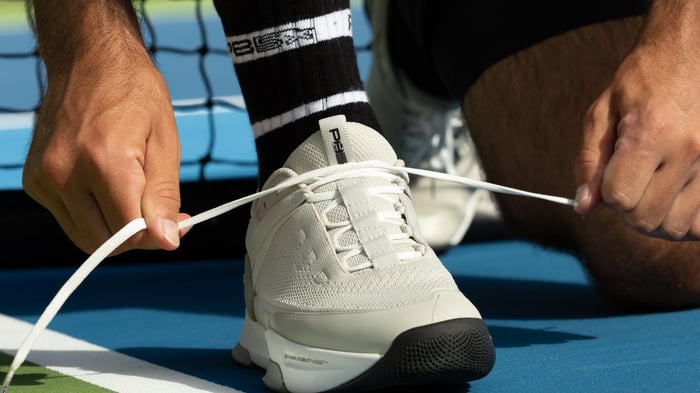
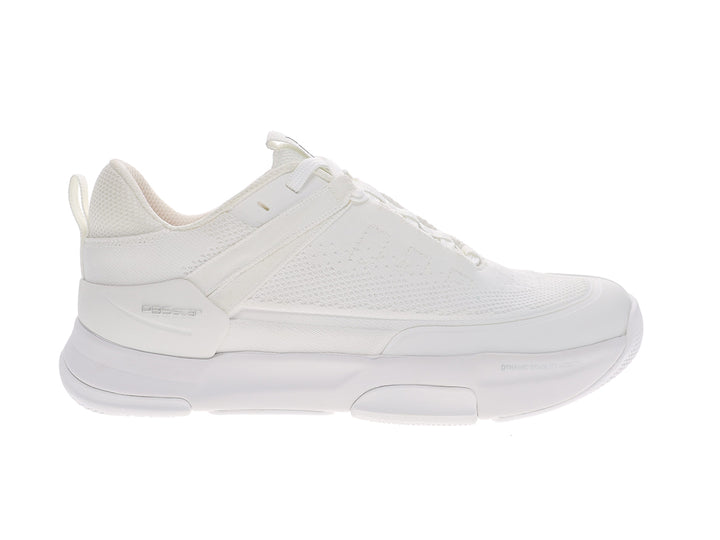
- Train in performance footwear: Shoes like our PB5 Court 2 provide stability and support for rapid pivots and help maintain balance during demanding drills.
Women's Pickleball Court Shoes, PB5 Court2 | White
$129.00
Dominate your pickleball matches with the style forward, PB5 Court2, a new era of high-performance technology engineered for a responsive ride. Built with Dynamic Stability Assist™, these Light-weight shoes are packed with features to deliver the traction and control needed… view
Building strength and power for competitive matches
Winning at a high level requires more than strategy. You need the physical foundation to execute it. Strength and power training for pickleball targets the muscle groups responsible for explosive shots, stable footwork, and endurance during intense rallies. These exercises focus on compound movements and rotational strength that directly transfer to match performance.
- Rotational core power: Medicine ball throws and resistance band rotations build torque for powerful serves and aggressive groundstrokes.
- Lower body explosiveness: Split squats develop single-leg stability for lunging shots and net play.
- Upper body drive: Lawnmower rows strengthen the muscles behind consistent backhand power.
- Plyometric movement: Box jumps and lateral bounds improve your first-step speed to reach difficult shots.
- Chest and shoulder stability: Dumbbell presses strengthen muscles that control paddle face and improve volley accuracy.
- Time-efficient circuits: Combine these exercises into 20–30 minute sessions two to three times a week for maximum results without cutting into court time.
Warm-up routines to prevent pickleball injuries
A good warm-up can set the tone for your entire match. Spending 10 to 15 minutes before play helps improve reaction time, agility, and injury resistance. The goal is to gradually prepare your body for the speed and intensity of high-level play.
- Dynamic movements: Leg swings and arm circles get blood flowing and muscles ready.
- Sport-specific activation: Shadow swings and paddle motions warm up the exact muscles you’ll use in competition.
- Lateral mobility: Side shuffles and crossover steps prime hips and ankles for quick directional changes.
- Quick foot activation: High knees and fast steps prep your nervous system for net exchanges.
- Core and shoulder engagement: Torso rotations and shoulder rolls activate stabilizers for serving and volleying.
- Progressive build-up: Start slowly, then increase speed and intensity until you’re match-ready.
Sharpening reaction time and on-court speed
The difference between making a play and watching the ball go by often comes down to milliseconds. Targeted reaction and speed drills train both your body and your mind to respond faster and move more explosively, no matter your age.
- Partner reaction drills: Have a partner toss balls randomly to challenge your reactions and balance.
- Reaction ball exercises: Work with unpredictable bounces to improve hand-eye coordination and decision-making.
- Sprint intervals: Short bursts of maximum effort with brief recovery build the acceleration needed for drop shots and court coverage.
- Fast-paced footwork: Mix shuffle steps and rapid direction changes every few seconds to build quickness under pressure.
- Performance tracking: Time your drills to measure and track improvements over time.
- Net approach acceleration: Practice explosive sprints from the baseline to the kitchen line to maintain offensive positioning.
Join the PB5star community today
The training strategies you have developed and the court performance you have worked hard to achieve deserve gear that matches your competitive drive. Our performance pickleball apparel is made for players who want both style and substance, using advanced fabric technology that helps you stay comfortable, supported, and focused during your most intense training sessions and matches. The PB5 Court2 shoes take it even further with Dynamic Stability Assist™ technology for precise, balanced movement during rapid directional changes, while their lightweight design keeps you moving easily through every drill and point.
It is time to get ready for your next breakthrough. Explore our exclusive collection created for athletes who never compromise on performance or style. Connect with fellow competitors, share your favorite workout routines, and discover new training ideas within a community that understands the connection between looking your best and playing your best. At PB5star, we believe the game is for all of us, and we are here to help you play it at your highest level.
FAQs
How can I safely increase my strength and power for pickleball?
Safe strength building starts with compound movements like squats and lunges that build foundational lower body power while reducing injury risk through proper movement patterns. Focus on rotational exercises using resistance bands or medicine balls that mirror your stroke mechanics, progressing gradually in intensity over 4-6 weeks. The key is consistency with 2-3 focused sessions per week rather than sporadic high-intensity workouts that can lead to overuse injuries.
What warm-up routine best prevents common pickleball injuries?
Dynamic movement preparation that includes leg swings, arm circles, and sport-specific paddle movements provides the most effective injury prevention in just 10-15 minutes. Progressive intensity building through gentle movements that gradually increase pace allows your heart rate and muscle temperature to rise naturally before match play. This approach significantly reduces the risk of strains and pulls that can sideline competitive players during tournament seasons.
How do I train to react faster during matches?
Reaction time improvements come from partner drills where balls are randomly tossed in different directions, forcing split-second decision-making under pressure. Reaction ball exercises with unpredictable bounces develop hand-eye coordination, while sprint intervals build the explosive acceleration needed for net play. Track your progress using smartphone apps or stopwatch measurements to create data-driven feedback that supports continuous improvement, especially when balancing pickleball with other sports in your training routine.