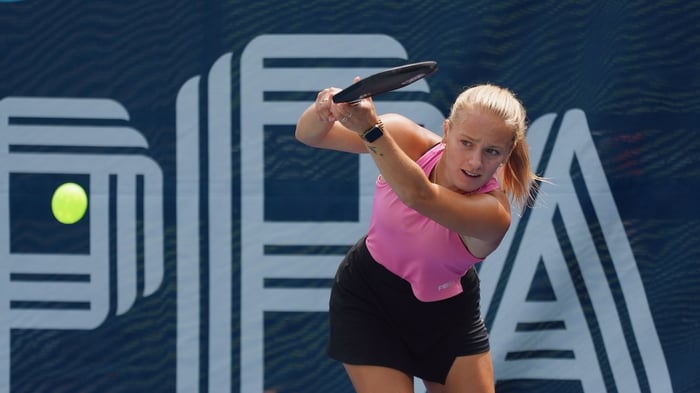

Believe or not, but I started as a squash player before I found pickleball. Years ago, I was in the midst of a particularly intense squash training session when my coach casually mentioned a "paddle sport" that was gaining popularity nationwide. That brief suggestion sparked a curiosity that would completely reshape my competitive career, leading me from the enclosed courts of squash to the open-air community of pickleball.
What started as simple exploration became a passionate pursuit that taught me something unexpected: our previous sports experiences don't just transfer skills; they transfer the very reasons we compete. My approach now centers on one simple reminder: "Stay adaptable." Every match and every opponent requires flexibility. Pickleball gave me back the sense of fun that first made me love sports, where pressure feels like opportunity, not burden. It reminded me that growth happens when you trust yourself enough to adjust, evolve, and play without fear.
From multi-sport roots to a squash foundation
Growing up, I was that kid who couldn't pick just one sport. Flag football taught me rapid decision-making under pressure, tennis developed my hand-eye coordination, gymnastics gave me body awareness and flexibility, and volleyball sharpened my reflexes at the net. That variety created the agility, reaction time, and mental flexibility that still define how I compete today.
Squash eventually became my primary focus, and looking back, it was the perfect bridge to pickleball. The lightning-fast rallies demanded split-second reactions, while the confined court space required precise footwork and strategic positioning. Every match was a chess game played at breakneck speed, where reading your opponent's body language could mean the difference between winning and losing a point.
What made my background valuable wasn't early specialization—it was variety. Years spent moving between courts, fields, and tracks built a foundation I could draw on in any challenge. Squash became where it all came together: spatial awareness from gymnastics, hand-eye coordination from tennis, and quick reactions from volleyball.
Translating skills: How squash prepared me for pickleball
The transition from squash to pickleball felt surprisingly natural once I understood how my skills could transfer between the two. Racquet sports often demand similar movement, focus, and adaptability, traits that make cross-training between them incredibly effective.
Key skills that carried over to pickleball
- Master quick lateral movements - Those rapid side-to-side adjustments I perfected chasing down squash shots became my competitive advantage at the kitchen line. Quick positioning differentiates between controlling the point and watching it slip away.
- Read angles instinctively - Years of anticipating where the squash ball would ricochet off walls trained my eyes to predict shot placement, helping me shade correctly with my partner and cover gaps before opponents could exploit them.
- Retrieve under intense pressure - The relentless pace of squash singles built the mental toughness to stay calm during long pickleball rallies. This pressure training helps me make defensive resets when others might panic.
- Adapt movement patterns quickly - Learning to shift from squash's straight-line drives to pickleball's upward arcs and soft touches proved that athletic adaptability matters more than sport-specific perfection.
Finding my spark: The moment pickleball became my path
My first professional tournament wasn't supposed to be career-defining. I entered almost on a whim, curious to test my adapted squash skills against serious competition. What I discovered that weekend changed everything; not just my athletic trajectory, but my understanding of what it means to compete at the highest level.
The biggest challenge wasn't technical. In squash, I'd learned the hard way that pressure could drain the life out of competition, turning matches into stressful battles instead of joyful competition. Finding balance became my north star. I developed routines to reconnect with why I started playing: the satisfying pop of a perfect dink, the chess-like positioning, the electric energy of a crowd-pleasing rally.
Building mental resilience through coaching
Working with a mental performance coach completely reshaped my approach to competition. Early in my career, I thought mental toughness meant suppressing nerves or pretending pressure didn’t exist. My coach helped me realize it’s the opposite; true resilience comes from accepting pressure, understanding it, and channeling it into focus.
That mindset shift turned anxiety into awareness. Instead of overanalyzing mistakes, I began viewing them as feedback, data I could use to make better decisions in the next rally. Pickleball demands constant adaptability, and the more I leaned into that, the calmer I became in tense moments. My preparation stayed the same, but my relationship with competition changed completely.
“Pressure is a privilege” has since become a guiding principle in my training. It reminds me that the weight of competition only exists because I’ve earned the opportunity to play at this level. Every high-stakes match, every crowd-filled court, is a moment to trust the process and prove, not to others, but to myself, that I can stay composed and compete with purpose.
Why I Keep Playing
How you keep your passion for pickleball alive after coming from a different athletic background largely depends on developing the right mental routines and support systems. Working with a coach has been game-changing for me, not just in terms of technical skills, but also in maintaining perspective when the competitive pressure mounts. I've learned to embrace both wins and losses as data points, rather than defining my worth as an athlete.
I remember why I fell in love with this sport in the first place: the pure joy of competition, the satisfaction of a perfectly placed shot, and the camaraderie with fellow players. When pressure builds during tournaments, I've trained myself to see it as a privilege rather than a burden. Not everyone can compete at this level, and that perspective shift allows me to play more freely.
I’m proud to be supported by PB5star, a brand that embodies the same focus, resilience, and love for the game that drives me forward. The beauty of pickleball lies in its community, where players bring diverse athletic backgrounds and a shared passion to every rally. Together, we’re not just improving our skills; we’re building a culture of growth, connection, and confidence that makes this sport truly special.