
Key Takeaways:
Understanding the serving sequence in pickleball is crucial to keep the game smooth and error-free.
Avoiding common serving mistakes like incomplete serves and lack of practice can significantly enhance your performance on the court.
Mastering the first serve procedures and practicing consistently with proper techniques will boost your confidence and accuracy in the game.
Many pickleball players, even experienced ones, sometimes struggle with remembering the serving sequence. If you've ever stepped onto the court unsure of whose turn it is to serve, you're in good company.
Mastering the basics of who serves when is key to keeping the game flowing smoothly and avoiding confusion. Understanding how serving rotates between players and sides will elevate your game. You can start to think more strategically about your serves and returns. Ready to demystify the pickleball serve?
Let’s break down everything you need to know, whether you're a newbie or a competitive player looking to sharpen your mental game. At PB5star, we're all about helping you play with confidence – and that starts with a solid grasp of the fundamentals. Visit our website to gear up with apparel designed to keep you looking and feeling great on the court.
Understanding Basic Pickleball Serving Rules
Serving in pickleball comes with a few foundational rules that every player should know to enjoy a fair and competitive game:
The Serve Must Be Underhand: The serve must be executed with an underhand stroke, where the paddle head remains below the waist. The paddle must move in an upward arc at the moment of contact, and the ball must be struck below the server’s navel, which keeps the motion closer to a true underhand action and prevents overly aggressive, overhead-style serves.
Feet Positioning Is Essential: When serving, at least one foot must stay behind the baseline, and neither foot may touch the court or sidelines until the paddle makes contact with the ball. Stepping on or over the baseline (including the imaginary extension of that line past the sideline) before contact is considered a foot fault and results in a lost serve. This ensures that players start each serve from a designated area.
The Serve Must Land Diagonally: Serves must be aimed diagonally to the opponent's service court. Any serve that lands outside this area results in a fault, and the serve goes to the other team. On the very first serve of a point, the ball is sent from the server’s right-hand side to the receiver standing in the right service box on the opposite side of the net.
Single-Point Scoring: In pickleball, only the serving side can score. If the serving side faults or fails to earn the point, control of the serve passes to the other team.
Only One Serve Attempt: Unlike some racket sports, you get just one chance at a legal serve. If the ball hits the net and does not land in the correct diagonal service court, or if you commit any serving fault, the serve is lost, and play moves on.
The Drop Serve Option: Pickleball allows for a "drop serve," where players can let the ball bounce before hitting it. This variation can help maintain control without height restrictions, offering more serving options.
By internalizing these basic rules, players can serve with confidence and set a consistent foundation for competitive play.
Singles vs. Doubles: Serving Sequence Explained
The serving rules in singles and doubles differ slightly, so it’s essential to understand the nuances in each format.
Singles Serving: In singles, players serve until they fault. Once the server faults, the serve passes to the opponent, who follows the same process. The server alternates sides with each point scored, ensuring serves always originate from the right side of the court. When the server’s score is even, they serve from the right-hand side; when it’s odd, they serve from the left, which is an easy way to remember where you should be standing between points.
Doubles Serving Sequence: In doubles, both players on each team get an opportunity to serve before the serve is handed over to the other team. The first server starts on the right side, serving diagonally. After a point, the partners switch sides, and the same player serves from the left. This rotation continues until the server faults. Then, the serve transfers to the second player on the team. Once both players fault, the serve passes to the opposing team. It’s helpful to remember that serving players alternate after scoring points to maintain a dynamic and fair game.
That structured “server 1, then server 2” pattern, along with clear right‑side and left‑side positions, helps everyone on the court track who should be serving, receiving, and switching sides during doubles play. This structured rotation encourages teamwork and balance, as both partners share responsibilities for scoring and defending.
Deciding Who Serves First in Pickleball
Before the game begins, players must decide who will serve first, as the initial server can set the game’s rhythm. There are a few common methods to determine who serves first:
Flip a Coin: The most traditional way to decide is with a coin flip. One side calls heads or tails, and the winner of the toss gets the first serve.
Spin a Paddle: Many players use this simple method by spinning a paddle. The direction in which the handle points determines the first server. Some groups like to add personality here, such as letting the side of the court “closest to Seattle” (pickleball’s birthplace) start, or naming the handle and face of the paddle before the spin for a playful twist.
Rock, Paper, Scissors: This quick, friendly game works well for determining the first serve and adds a bit of lightheartedness before the match.
Once decided, the first server starts from the right side, aiming to serve diagonally to the opponent's right service court.
Avoiding Common Serving Mistakes
Even experienced players can fall into habits that weaken their serve. Here’s how to avoid common errors to maintain a strong, consistent serve:
Incomplete Follow-Through: A partial follow-through can result in weak serves, giving opponents an easy return. Focusing on a complete, smooth motion will generate more power and precision.
Skipping Serving Practice: Many players overlook the importance of practicing serves. Serving is the only moment when you have complete control over the point's start, so allocate time for focused serving drills. Repetition builds muscle memory, making a solid serve more instinctive.
Neglecting Foot Placement: Standing too close to the baseline can lead to faults. Make sure one foot stays behind the line to ensure each serve is valid.
Overlooking Common Faults: Serving to the wrong (non‑diagonal) box, hitting the ball above your waist, or allowing the serve to double‑bounce before the receiver hits it are all faults that immediately end your turn. Getting familiar with these specific mistakes and how to avoid them keeps your serve legal and the rally in your hands.
Addressing these common mistakes will make your serve more reliable, allowing you to focus on strategy rather than mechanics.
Types of Pickleball Serves and When to Use Them
Pickleball offers several serve types that, when mastered, can keep your opponents guessing and add variety to your play. Here’s a look at some effective serve techniques:
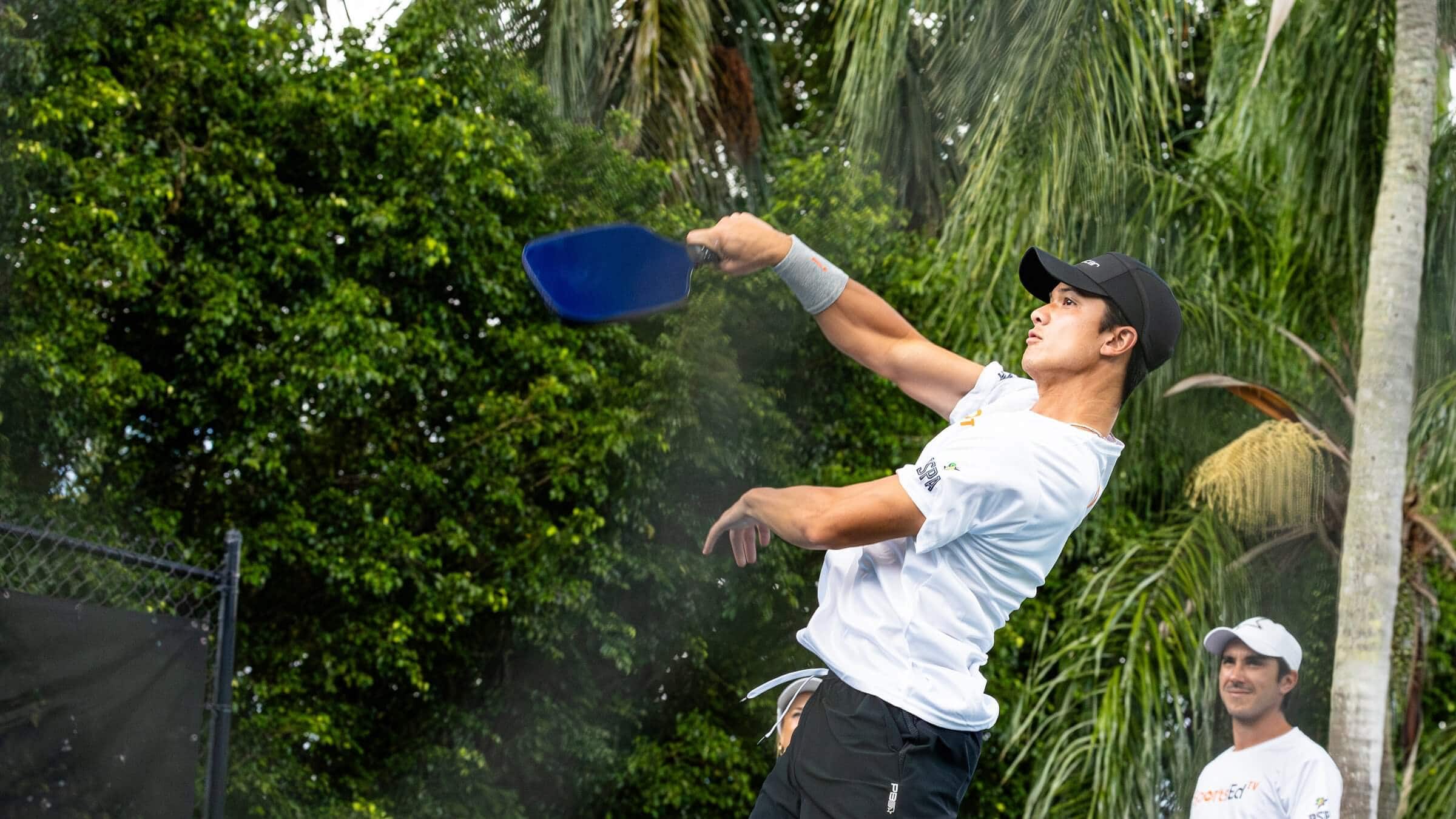
Power Serve: This serve is fast and forceful, designed to push the opponent back and limit their ability to control the return. Aim for a high contact point, keeping the paddle under the navel to ensure it’s within regulation.
Soft Serve: A gentle, controlled serve can throw off an opponent who’s expecting a fast pace. Use this when you want to disrupt their rhythm or force them to make an error.
Defined Slice Serve: With a slice serve, you brush across the side of the ball to create sideways spin, causing it to skid or curve after bouncing. This can make returns more awkward for opponents who are used to straightforward, flat serves.
Topspin Serve: By adding topspin, you can make the ball dip quickly after crossing the net, adding an element of unpredictability. This is especially effective against players who struggle with low balls.
Drop Serve: Allowing the ball to bounce before hitting it can help with control, particularly for newer players or when aiming for precision.
Short Serve: A well‑placed short serve that lands closer to the service line rather than deep near the baseline can draw your opponent forward unexpectedly, disrupt their preferred positioning, and throw off the timing of an aggressive return.
Each type of serve has its place in a match, so practice a variety to adapt to different opponents and situations.
Advanced Serving Strategies
Once you've mastered the basics, consider implementing advanced strategies to gain a competitive edge:
Vary Serve Placement: Switch between serving deep, near the baseline, and shorter serves closer to the service line. Changing the placement can keep your opponent on their toes and force them to adjust their positioning.
Use Spin: Adding spin can make your serve challenging to return, especially if your opponent struggles with angled or curved shots. Experiment with topspin and backspin to see which works best in different conditions. You can also mix in slice serves to pull the ball toward or away from your opponent’s paddle side, making clean contact more difficult.
Adapt to Opponents’ Weaknesses: Observe your opponent’s responses to each serve type. If they struggle with a specific serve, use it strategically to maintain control of the point.
Change Speeds Intentionally: Alternate between slower, more deceptive serves and quicker, more driving serves so your opponent cannot settle into a predictable rhythm on the return.
Adjust for Singles vs. Doubles: In singles, a deep, consistent serve that pins your opponent near the baseline is often the priority. In doubles, however, you can be more targeted, aiming serves toward the weaker returner or into the sideline service boxes that force the receiving team to move and open up space.
By layering these strategies onto your foundational skills, you’ll enhance your serve’s effectiveness and make it a powerful tool in your gameplay.
Keys to Effective Pickleball Serving
Mastering the serve is a journey that begins with foundational rules and builds into more advanced techniques. Here’s a quick summary to ensure you’re always serving at your best:
Understand Basic Rules: Know the fundamental rules governing serving position, rotation, and the underhand technique.
Practice Regularly: Consistent practice builds muscle memory, making your serve more reliable.
Experiment with Serve Types: Develop a repertoire of serves, including power, soft, spin, and drop serves.
Adapt to Conditions: Wind, sun, and even surface type can influence your serve. Be prepared to adapt.
Develop Advanced Strategies: Use placement, spin, and observation of your opponents to enhance your serve’s effectiveness.
Stay Mentally Focused: Serving is one of the few moments when you can control the pace and setup of the game. Approach each serve with calm confidence.
By also understanding the most common serving faults and how they happen, you can avoid giving away free points and keep every rally starting on your terms. Whether you’re new to the sport or honing advanced strategies, a strong serve will empower your game and keep your opponents on their toes. Grab your paddle, hit the court, and let your practice pay off in powerful, precise serves every time.
At PB5star, we know that understanding these basics is essential to maximizing your enjoyment of the game. So grab your go-to paddle, gather your crew, and get ready to serve up an awesome time!