
What Artemis II teaches us about footwear, movement, and optimism
Footwear design doesn’t start with shoes. It starts with questions.
How do humans move for longer? How do you support the body without getting in its way? How do you design for endurance, not just peak moments?
Interestingly, those are some of the same questions driving humanity’s return to the Moon.
The Artemis II program might look, on the surface, like a story about rockets and spaceflight. But culturally, it’s something else entirely. It’s a reminder that exploration—real exploration—has always shaped how we design, move, and think here on Earth. Including what we put on our feet.
Exploration Shapes Design (Even When It’s Not Obvious)
Throughout history, ideas born in extreme environments have a way of filtering into everyday life. Not always as direct technology transfers, but as design philosophies.
Space programs demand:
efficiency over excess
durability over novelty
comfort over flash
systems that work quietly, consistently, and for the long haul
That mindset shows up everywhere once you start paying attention: from architecture and furniture to apparel and footwear. Designing for astronauts forces clarity. There’s no room for gimmicks when failure isn’t an option.
That same discipline is something we think about constantly when designing shoes meant to support real people, real movement, and real lives.
Artemis as a Cultural Reset: Why This Resonates With PB5star
When humans first walked on the Moon, it didn’t just advance science; it reset expectations. It reminded people that big, collaborative, long-term goals were still possible.
Artemis does that again, quietly.
In a world optimized for speed and short-term wins, returning to the Moon is almost countercultural. It favors patience. Iteration. Learning over time. It values optimism; not the loud, hype-driven kind, but the steady belief that difficult things are worth doing. That kind of optimism matters deeply in design. Because good design isn’t reactive. It’s intentional.
At PB5star, we design footwear for court sports and everyday movement: pickleball, travel, long days, social play. That might seem far removed from space exploration, but philosophically, it isn’t.
We’re obsessed with:
how people move over decades, not seasons
how comfort can support confidence
how stability lets you forget about your feet and stay present
optimal use and efficiency for your everyday life
durability and comfort over bells and whistles
That’s where our fascination with space comes in.
Our brand language (PB5star, Cosmic, Nebulon™ Core) reflects that curiosity about forward motion, exploration, and designing with the long view in mind.
Cosmic Isn’t About Space. It’s About Endurance.
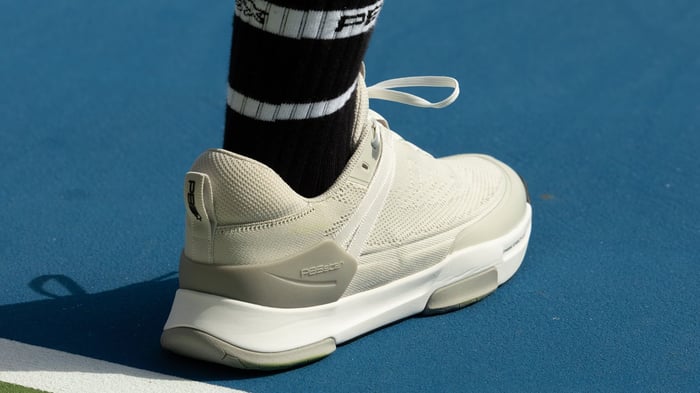
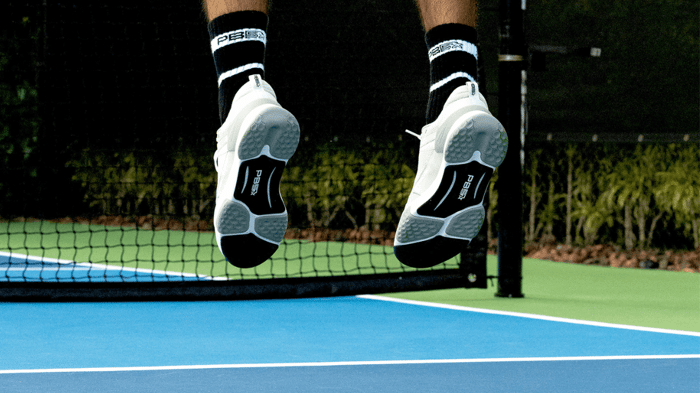
Cosmic, our everyday court-to-life shoe, was built for the real, multiple environments you go through all the time: hard courts, travel days, casual games, long walks, and everything in between.
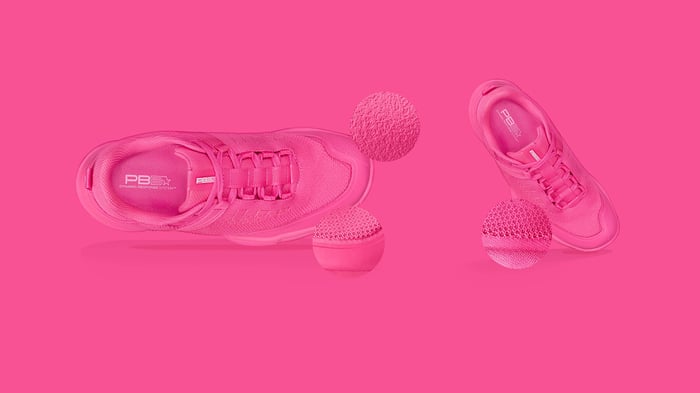
Inside is our Nebulon™ Core Foam, designed to balance lightweight cushioning with stability. It’s meant to support movement without demanding attention. To work quietly. To last.
That approach mirrors what draws us to Artemis:
thoughtful engineering
human-centered design
systems built to endure rather than impress
Space exploration isn’t flashy for the sake of flash. Neither is good footwear.
Design Learns From Ambition
You don’t have to be an astronaut to feel the ripple effects of Artemis.
Exploration gives designers permission to think bigger. To simplify. To ask better questions. To prioritize longevity over novelty.
It reminds us that:
comfort is not weakness
stability enables freedom
optimism can be engineered through thoughtful design
Those ideas matter whether you’re designing spacecraft or shoes.
Looking Up, While Staying Grounded
We’ll keep watching Artemis.
We’ll keep learning from how exploration shapes culture and design.
And we’ll keep letting that curiosity inform how we build footwear that supports movement, play, and longevity here on Earth.
Because sometimes the most grounded design decisions come from looking up and remembering that humans are capable of building things meant to last.