
Key Takeaways:
The right Labor Day event is not just about location or prestige; format, surface, and match volume determine how much movement, stamina, and recovery your day will require.
Court-specific shoes give players a real edge in a long tournament day because lateral support, traction, fit, and break-in all affect how well you cut, stop, and stay stable as fatigue sets in.
Players hold up better across multiple matches when they treat gear and recovery as one plan: performance-ready apparel, a smartly packed bag, hydration, quick fuel, and short reset routines keep movement cleaner and decisions sharper.
The first match of a Labor Day tournament always feels manageable. Courts are cool, legs are fresh, and everything clicks. By match three or four, the late-summer heat has settled in, footwork starts to slip, and the players who planned ahead start to separate from the ones who winged it. That gap rarely comes down to skill alone.
A strong Labor Day pickleball tournament day is built before you ever step on the court. The event format determines how many matches you'll play. Your footwear determines how well you'll move through all of them. And your between-match routine determines whether you arrive at the later rounds sharp or spent. From verified tournament listings to what goes in your bag, PB5 breaks down every decision that shapes how you feel and move when it counts.
Labor Day Pickleball Tournaments To Check First
Labor Day weekend draws competitive players across the country, with events ranging from local round-robins to USA Pickleball-sanctioned competitions with national ranking points on the line. Format isn't just a scheduling detail; it's a physical load calculation. Pool play into a bracket means more matches than a straight elimination draw, which changes how you need to pace yourself, what your shoes need to hold up to, and how seriously you should treat recovery between rounds. Check the structure before you register.
Tournament Name | Host / Location | Format & Surface Notes | Best Fit
|
|---|---|---|---|
Listed via pickleballtournaments.com | Round-robin format; skill-based divisions; structured start times across multiple sessions | Players who want predictable match pacing and clear skill-level brackets without a chaotic draw | |
Leavenworth, KS — Parks & Recreation | DUPR-based pool play into bracket; outdoor hard courts; $35 entry fee | Players who prefer data-driven skill placement in a community-organized, lower-pressure format | |
USA Pickleball Sanctioned Events (Labor Day Weekend) | Various locations — search by date at usapickleball.org | TPS-points eligible; events may carry Golden Ticket qualifier status for Nationals | Competitive players tracking national ranking or working toward a Nationals bid |
NYC & San Diego Regional Opens | New York City and San Diego metro areas — see our NYC guide and San Diego guide | Open and skill-division formats; hard court surfaces; indoor and outdoor options, depending on venue | Players who want strong regional competition near established local player pools and easy venue access |
Verify registration deadlines and current-year dates directly on each event's official page before committing, since Labor Day tournament calendars update through the summer. For any event that lists multiple format options, the round structure tells you a lot about how physically demanding the day will be; pool play into a bracket typically means more matches than a straight elimination draw, which changes how you need to plan your shoes, recovery, and energy between rounds.
What Shoes To Wear For Quick, Stable Movement
A multi-match Labor Day tournament is a different animal from a casual weekend session. By the third or fourth match, your feet are working harder, your reaction time slips slightly, and any weakness in your footwear starts showing up in your movement. Choosing the right shoe before the weekend arrives is one of the most direct performance decisions you can make.
Court-specific shoes are built around the demands that research on court shoe design has long identified as priorities for lateral sports: traction, lateral stability, torsional control, and cushioning. Running shoes are engineered for forward motion and heel-to-toe transitions. That's a fundamentally different job, and it shows the moment you need to brake hard or push off sideways.
A 2025 experimental study found that standard court footwear outperformed minimalist alternatives in change-of-direction tasks, with performance losses as high as 9% in repeated cutting scenarios when the wrong shoe was worn. Over a full tournament day, that gap compounds.
Here's what to keep in mind when choosing and preparing your footwear:
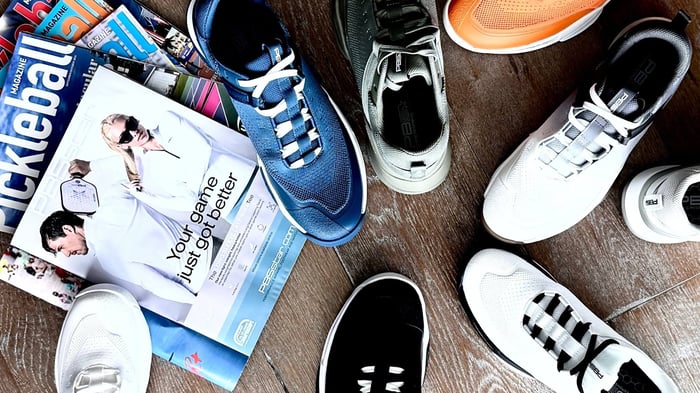
Prioritize lateral support and traction over cushioning alone. Court shoes are designed with reinforced sidewalls and outsole patterns suited for the stop-and-go, side-to-side demands of pickleball. Traction varies significantly across shoe models and surfaces, making surface-matched footwear a real performance factor, not just a marketing claim.
Break in your tournament shoes before Labor Day weekend. A shoe that hasn't been worn in for at least a few sessions is an injury risk, not a performance tool. Wear your court shoes through a couple of practice rounds so they've conformed to your foot, and you've confirmed the fit holds during lateral cuts.
Check the outsole against the tournament surface. Outdoor hard courts and indoor sport surfaces respond differently to tread patterns. Our Court Shoes 101 guide breaks down how to match outsole type to surface, which matters when you're playing multiple rounds on the same court all day.
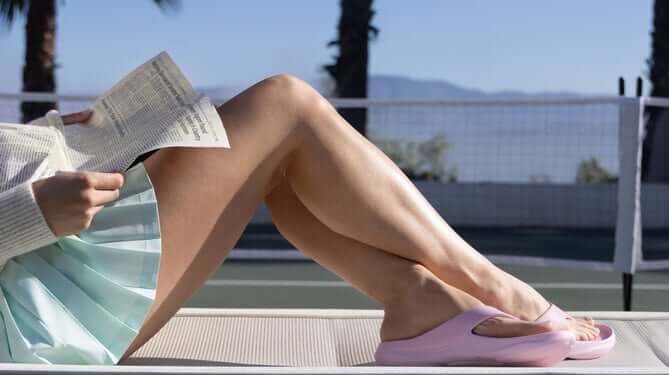
Bring recovery slides for time between matches. Keeping your court shoes on between rounds keeps your feet in a compressed, performance-ready state when they actually need relief. Recovery slides with proper arch support, a heel cup, and forefoot features let your feet decompress and reset so you're not carrying accumulated tension into the next match.
Fit should feel snug through the midfoot with room in the toe box. A shoe that shifts during lateral movement creates friction and instability. As our pickleball shoe guide notes, the right fit locks your heel in place and gives your toes enough room to splay naturally when you push off.

What To Wear, Pack, And Do Between Matches
By the second half of a long match day, comfort isn't incidental; it directly shapes your footwork, your shot selection, and how cleanly you move under pressure. Getting this right means thinking about your apparel, your bag, and what you actually do during the gaps between matches.
Apparel Built for Repeated Movement
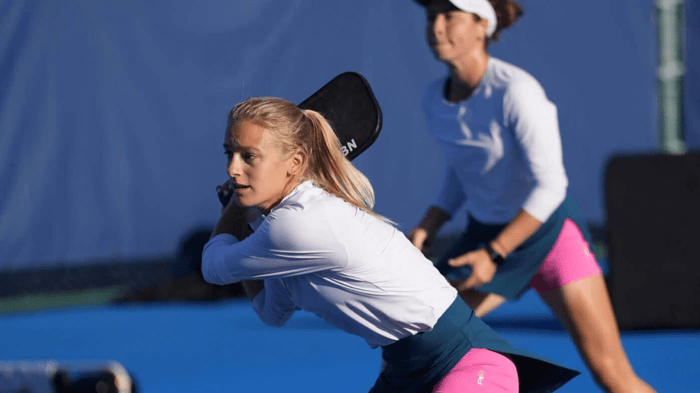
Figuring out what to wear to a Labor Day pickleball tournament for comfort, mobility, and performance starts with one question: Does the fabric move with you and manage heat across a full day of matches? Moisture-wicking fabrics pull sweat away so you're not adjusting a damp shirt mid-point. Stretchy, four-way fabric keeps up with lateral cuts and low-ready positions. Our pickleball apparel is built with that kind of repeated movement in mind, and it's worth choosing pieces that won't demand your attention during play.
What Goes In Your Bag
The USA Pickleball Event Operator Guide notes that water and snacks are provided at sanctioned events, but you should not count on them being where you need them, when you need them. Pack your own water, electrolytes, quick snacks, a towel, spare grip tape, sunscreen, and a fresh shirt. That shirt change matters more than most players expect; dry clothing keeps you cooler and reduces friction across a long match day.
How To Reset Between Matches
Immediate rehydration with sodium-containing fluids and fast-digesting carbohydrates are the moves that protect performance in back-to-back match scenarios. Beyond fueling, keep your between-match routine short. A brief cooldown walk, a few hip and shoulder mobility moves, and light shadow swings are enough. Elaborate routines drain the energy you need on court; short resets keep you sharp without costing you anything.
Build A Tournament Kit That Holds Up All Day
The players who hold up best through a long Labor Day tournament aren't usually the ones with the most talent. They're the ones who treated their gear as a system. Shoes built for court-specific lateral demands, apparel that manages heat and sweat across multiple matches, and a simple between-match recovery routine work together. When one piece is missing, the others carry more load than they should.
Gear choices made the week before Labor Day matter more than any last-minute swap on match day, because the shoe that hasn't been broken in and the bag missing the electrolytes are the ones that cost you in the fourth match, not the first. PB5 Court Footwear collection is built for the twists, turns, and braking demands of court sports, and pairs with recovery slides designed to give your feet real relief between rounds. Build the kit now, so the only thing on your mind when you step on court is the match in front of you.
FAQs
What should I pack for a Labor Day pickleball tournament to stay ready for long match days?
Your bag should cover the problems that will actually show up: a backup paddle, court shoes already broken in, extra grips, electrolytes, easy snacks, sunscreen, and a towel. Our packing essentials guide covers the full list.
How should I warm up and recover between matches at a Labor Day pickleball tournament?
Keep it short and purposeful. A few minutes of dynamic movement before a match is enough to prime your joints without draining your legs. Between rounds, a light walk and some hip or ankle mobility work does more than sitting still. Eating a small, easy-to-digest snack within 30 minutes of finishing a match supports faster recovery before the next one starts.
What should I wear to a Labor Day pickleball tournament if the day starts cool and ends hot?
Layering is the right move. Start with a moisture-wicking base layer, add a light mid-layer for morning warmth, and strip down as temperatures climb. REI's layering guide is a useful reference for material choices. The CDC also recommends lightweight, light-colored, loose-fitting clothing for athletes competing in late-summer heat. Match apparel to the full range of the day, not just the first game.