Key Takeaways:
Court-specific shoes are essential for multi-sport players, offering superior lateral stability, traction, and cushioning that running shoes cannot provide, directly reducing injury risk and enhancing performance.
Matching your court shoes’ outsole and traction pattern to the playing surface (hard court, clay, indoor, or turf) is crucial for maximizing grip, durability, and safety during quick direction changes.
Proper fit, regular shoe rotation, and maintenance not only extend the life of your footwear but also ensure ongoing comfort and joint protection across pickleball, tennis, and padel sessions.
The fastest way to build confidence and reduce rolled ankles across pickleball, tennis, and padel is choosing shoes built for lateral play, not running. Running shoes simply lack the support these sports demand.
The key difference lies in how court shoes for multi-sport players should balance stable lateral support, surface-matched traction, and cushioning that protects joints during quick stops and pivots. This guide breaks down the features that matter, how to match outsoles to different surfaces, and fit tips you can share with your community. Discover how PB5 engineers court-specific stability for the twists and turns your game demands.
Essential Features in Court Shoes for Multi-Sport Play
When you're organizing community sessions that span pickleball, tennis, and padel, you need shoes that protect your players across different court demands. The right features in court shoes for multi-sport activities become even more important when you're switching between sports mid-week or helping newcomers avoid the rolled ankles that can sideline them from future games.
Lateral Support Prevents Injury During Quick Direction Changes
A firm heel counter, midfoot wrap, and lateral outrigger (the extended sole edge that prevents foot rollover) work together to keep your foot stable during defensive slides and quick pivots. Biomechanical research confirms that lateral stability features are the most important design elements for court sports. The Dynamic Stability Assist™ technology found in quality court shoes creates a secure foundation that prevents your foot from rolling over during those defensive plays.
Court-Ready Traction Outperforms Running Shoe Treads
Running shoes are designed for heel-to-toe motion, but court sports require multidirectional grip and sudden stops, whether you're playing pickleball or transitioning to tennis. Sports medicine studies demonstrate that sport-specific athletic shoes feature specialized rubber compounds and tread patterns that handle the unique demands of court surfaces. A stable platform with proper traction rubber gives you the confidence to make confident movements without slipping.
Strategic Cushioning Balances Power and Protection
The best court shoes feature responsive cushioning under the forefoot for explosive push-offs and slightly firmer support under the heel for controlled landings. Professional guidance recommends this balanced approach to reduce stress on joints during split-steps and overhead shots across multiple court sports. Proper cushioning also prevents the foot fatigue that can end your sessions early and keep you off the court.

Choose the Right Court Shoes for Different Court Surfaces
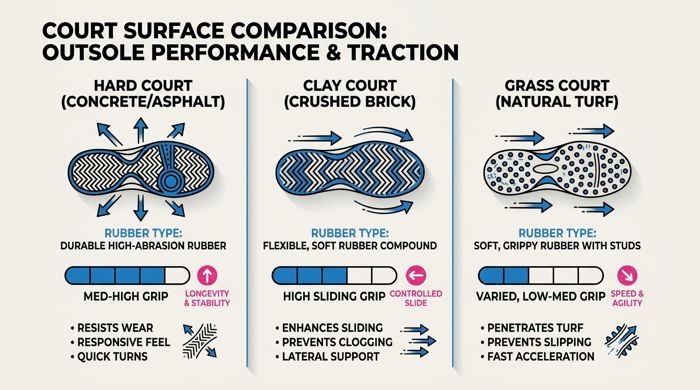
Different court surfaces create unique demands on your footwear, and matching your outsole to the playing surface prevents premature wear while keeping you stable during those quick lateral moves. The wrong rubber compound or tread pattern can leave you sliding when you need to stop or wearing through your soles faster than expected.
Surface | Movement Demands | Traction Pattern | Rubber Hardness/Durability | Notes/Use Cases
|
|---|---|---|---|---|
Hard Courts (Tennis/Pickleball) | Quick stops, lateral slides, forward sprints | Modified herringbone with multidirectional grooves | Firm, durable compound resists abrasion from concrete/asphalt | Best for outdoor courts; expect 6-8 months with regular play |
Clay Courts | Sliding stops, controlled skids, pivot turns | Full herringbone with deeper, wider grooves | Medium-firm with good grip sheds clay buildup | Allows controlled sliding; clean grooves regularly |
Indoor Gym (Wood/Synthetic) | Sharp cuts, quick direction changes, jump stops | Shallow treads with small cuts or circles for grip | Soft, tacky rubber maximum grip on smooth surfaces | Squeaks mean good traction; avoid outdoor use |
Padel/Artificial Turf | Multi-directional movement, sand-infill contact | Moderate herringbone with flexible sidewalls | Medium compound with deeper lugs | Handles sand infill; more forgiving on joints |
The right outsole choice improves your stability during community play sessions, whether you're moving between the tennis and pickleball courts or trying padel for the first time. As our indoor vs outdoor shoe guide explains, using the wrong rubber compound can cut your shoe's lifespan in half, and our durability guide shows how surface choice directly impacts how long your shoes will last.
Support, Cushioning, and Fit: Comfort That Protects
The right support and cushioning in multi-sport court shoes can make the difference between confident play and early fatigue. When you're moving between pickleball, tennis, and padel, your feet need protection that adapts to sudden movements while keeping you comfortable through long community sessions.
Prioritize lateral stability features. Look for a firm heel counter, supportive midfoot shank, and slight lateral outrigger that work together to prevent ankle roll during defensive slides and lateral cuts across all court sports.
Choose a balanced cushioning design. A medium-firm heel paired with a slightly softer forefoot preserves joint comfort without feeling mushy, while an 8–12 mm drop (the height difference between heel and toe) provides reliable heel-to-toe transitions during split-steps and overheads.
Secure the midfoot, free the toes. Aim for a snug midfoot lock that prevents sliding inside the shoe, combined with wiggle room in the toe box to accommodate natural foot expansion during play.
Invest in proven stability systems. Features like our Dynamic Stability™ technology provide exterior heel counters and midfoot stabilizers that research shows can reduce ankle inversion risk during sudden direction changes.
Maintain performance through rotation. Switch between two pairs every 22–23 sessions to keep midsole foam responsive and maintain sharp traction edges, especially when playing on multiple surface types.
Consider advanced footwear technology. Look for structured heel design and responsive midsole cores that adapt to the specific demands of court sports while providing consistent support across different playing surfaces.
Men's Pickleball Court Shoes, PB5 Court2 | Astral Blue

$99.00
$129.00
Dominate your pickleball matches with the PB5 Court2, a new era of high-performance technology engineered for a responsive ride. Built with Dynamic Stability Assist™, these Light-weight shoes are packed with features to deliver the traction and control needed for quick… view
Find Your Fit With PB5 Court Footwear
The right court shoes transform your multi-sport experience by providing lateral stability, surface-matched traction, and joint-protecting cushioning that running shoes simply can't deliver. Research shows that footwear construction directly impacts biomechanics and injury risk, making engineered court-specific features make a meaningful difference for players who move between pickleball, tennis, and padel. These technical advantages become even more valuable when shared with your playing community.
Consider organizing a footwork clinic with your group to test different pairs side by side. Studies demonstrate that outsole patterns significantly affect traction and ankle stability during court movements, so hands-on comparison reveals which grip patterns and support levels work best for each player's movement style. Our shoe technology focuses on lateral moves and confident braking, while our recovery slides help relieve tension before and after sessions.
Ready to transform your court experience? Explore PB5 court footwear designed specifically for the quick cuts, pivots, and stops that define great court play.
FAQs
Can I use running shoes for pickleball, tennis, or padel?
Running shoes lack the lateral stability and court-specific traction patterns needed for safe side-to-side movement. Research shows that court shoes provide better rotational stability and lateral support than running shoes. Using running shoes increases your risk of rolled ankles and reduces your ability to brake quickly during defensive plays.
How do I choose the right size if I use orthotics or have foot issues?
Measure your feet later in the day when they're naturally expanded, and consider going up a half-size if you use custom orthotics. Look for shoes with removable insoles and a roomy toe box to accommodate bunions or hammertoes. Our sizing guide offers specific tips for getting the best fit with various foot shapes.
What maintenance keeps my court shoes performing across multiple sports?
Clean the outsole after each session to maintain traction, and rotate between two pairs to let foam recover between uses. Store shoes in a dry, ventilated area and replace them every 300-400 hours of play time or when tread patterns wear smooth. Proper footwear care extends both performance and injury protection.
How do court shoes reduce knee and ankle stress during quick movements?
Understanding how court shoes enhance performance and prevent injuries helps explain why proper footwear construction matters during sudden stops and direction changes. The lateral support systems and responsive cushioning help maintain proper foot alignment during pivots and lunges. Studies indicate that appropriate footwear design significantly influences injury risk and movement efficiency during dynamic court activities.
Should I choose different shoes for each sport I play?
One well-designed court shoe can handle pickleball, tennis, and padel if you match the outsole to your primary playing surface. Focus on finding a shoe that provides excellent lateral stability and appropriate traction for your most frequent court type. This approach offers better value and consistency than maintaining separate pairs for different sports you enjoy.