
Key Takeaways:
Properly fitted, cushioned, and supportive pickleball shoes are essential to reducing foot fatigue and keeping you performing at your best throughout long sessions.
Balanced cushioning and structural support in court shoes absorb impact and stabilize your feet during explosive movements, helping prevent early discomfort and injury.
Regularly assessing shoe fit, cushioning, and wear, and replacing shoes as needed, ensures lasting comfort and allows you to play longer, stronger, and with more confidence.
Fixing foot fatigue starts with understanding why your feet break down before your skills do. Early fatigue often comes from repeated impact, heat buildup, and unstable support during quick pivots and explosive direction changes. When footwear does not match your foot mechanics, pressure concentrates in the wrong areas, creating hotspots, soreness, and that heavy-foot feeling that limits how long you can play with confidence.
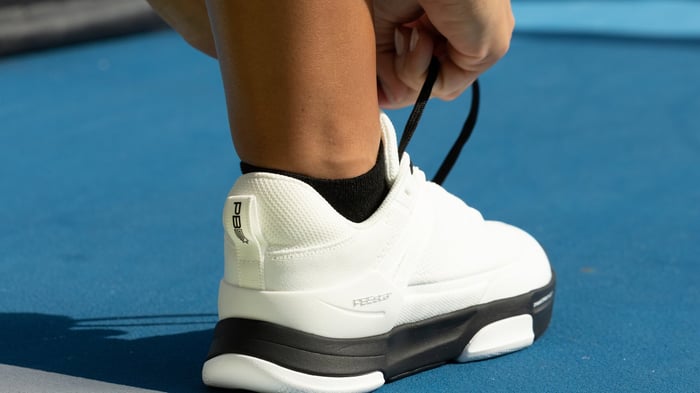
The right shoes change how your feet absorb impact, stay stable, and recover across longer sessions. Court-specific cushioning, lateral support, and a secure fit work together to reduce strain during plant-and-pivot movement while keeping you comfortable through extended play. At PB5star, our PB5 Court2 shoes are built with Dynamic Stability Assist™ to support quick directional changes and help you stay strong from the first rally to the last.
Why feet tap out first in pickleball: Fit, cushioning, and support
What causes foot fatigue during pickleball sessions comes down to three interconnected factors that work against your feet from the first serve. Pickleball's explosive starts, lateral shuffles, and abrupt stops generate ground reaction forces several times your body weight. Without proper arch and forefoot support, these forces overload your arches and forefoot, building stress that compounds with every rally.
Beyond these force-related challenges, poor shoe fit creates an energy waste that snowballs into session-ending discomfort faster than most players realize. Shoes that are too long, too narrow, or provide sloppy lockdown force your feet to work overtime, creating friction and hotspots that intensify with each game. Meanwhile, cushioning that's either too soft or too thin accelerates this fatigue cycle; overly plush foams demand more muscle work by game three, while thin soles fail to absorb the repetitive impacts from court movements.

Dial in fit: Lockdown, width, and toe box for court confidence
Achieving proper shoe fit for pickleball comes down to three fundamentals that directly impact your endurance and court performance. These essentials prevent energy waste and keep your feet comfortable through those extended competitive sessions.
Match width to your actual foot shape - Cramped toes spike forefoot fatigue, while loose fits waste energy on cuts.
Check for thumb-width toe room - When standing, accommodate for natural foot expansion during play, as detailed in our fit guide.
Lock your midfoot and heel - With no upward movement during hard stops, use the runner's loop lacing technique if needed.
Test lockdown with quick lateral shuffles - Your heel should stay planted without any slipping or lifting during side-to-side movements.
Replace shoes every 66 court hours - When the heel counter feels soft and the midfoot twists too easily, following sports medicine guidelines.
Master these fit fundamentals, and you'll experience more stable plants, reduced foot fatigue, and the confidence to maintain peak performance through those decisive final games. Consider our PB5 Court2 shoes with Dynamic Stability Assist™ technology for optimal lockdown and support.
Get cushioning and support right: Stable bounce that lasts all session
The perfect shoe cushioning for court sports feels like a trampoline under your feet, bouncy enough to absorb those hard landings, but firm enough to spring you back into action. Too many players get seduced by that cloud-like feeling in the store, only to find themselves dragging by game three when cushioned shoes become even more important as fatigue sets in.
Pick cushioning that bounces back, not sinks down - Smart midsole design absorbs the shock without turning mushy, so every push-off feels powerful instead of requiring extra muscle work during those lightning-fast exchanges at the net.
Look for a rock-solid support system - Reinforced sidewalls and structured platforms keep your foot from rolling inward during aggressive cuts, maintaining that stable base you need for confident lateral movements and sharp direction changes.
Try our 28-minute court test - Lace up, warm up for 5 minutes, then sprint from baseline to kitchen and back three times, followed by quick lateral shuffles to both sides. If the shoes feel stable and responsive without any wobble or dead spots, you've found your match.
Feel the spring in your step throughout play - Quality shoes like our Cosmic Sport-Casual Sneakers maintain that lively bounce from first serve to match point, so you're not fighting your footwear when the pressure's on.
When cushioning and support stay responsive under fatigue, your shoes stop being a limitation and start becoming an advantage. A stable bounce and strong lateral structure keep your footwork sharp, your joints protected, and your energy high throughout long sessions.
Keep sessions going: Choose smarter shoes
Fixing foot fatigue begins with a simple three-part check that determines whether your shoes support longer, stronger play. Secure fit lockdown keeps your foot stable during quick pivots, balanced cushioning absorbs impact without collapsing under fatigue, and structural lateral support protects your joints during sharp direction changes. When these elements work together, foot fatigue drops, movement stays controlled, and your sessions last longer without discomfort pulling you out early.
Tracking comfort and performance across 23 sessions helps you identify what truly works for your foot shape, play style, and intensity. That clarity translates directly into better shoe choices and better results on court, especially when your footwear is designed for speed, traction, and stability under pressure. At PB5star, our court shoes feature lightweight construction and court-ready traction to keep you confident through every sprint, pivot, and tiebreak.
FAQs
What features should you prioritize in pickleball shoes to reduce fatigue?
Focus on lateral stability (side-to-side support), responsive cushioning, and a secure midfoot lockdown. Look for a firm heel counter and adequate arch support that matches your foot type. Performance footwear with non-marking outsoles provides the traction and stability needed for quick directional changes without energy-wasting slippage.
How do I know if my current shoes are causing my foot fatigue?
Notice hotspots developing, heel slippage during hard stops, or forefoot burning that starts early in sessions. If you feel unstable during lateral movements or experience increased soreness after play, your footwear may lack adequate stability. Quality court shoes should feel secure and comfortable throughout your entire session without creating pressure points.
How often should I replace my shoes if I play leagues and drills weekly?
Replace pickleball shoes every 6-8 months with regular play, or when the midsole compression (cushioning breakdown) becomes noticeable. Athletic footwear fails primarily through midsole degradation, not outsole wear. High-volume players may need monthly replacements. Watch for flattened cushioning, worn heel counters, or increased post-game soreness as replacement signals.
Do insoles or orthotics help with early-session foot pain?
Smart insole choices reduce muscle fatigue by improving comfort and minimizing unnecessary muscle work. They work best when they support your natural movement patterns rather than forcing rigid alignment changes. Custom orthotics from a sports podiatrist may help if you have specific biomechanical issues causing persistent discomfort during competitive play.
How do I manage forefoot burning during tournaments with back-to-back matches?
Select shoes that are properly fitted with adequate toe box space, and consider wearing moisture-wicking socks to minimize friction. Try on shoes in the evening when your feet are slightly swollen, allowing about half a centimeter of space between your longest toe and the end of the shoe. Test lateral movements in-store to ensure the right stability without cramping your forefoot during extended tournament play.