Key Takeaways:
- The right court shoe starts with movement demands, not labels, because lateral cuts, hard stops, and quick recoveries require support that running shoes and generic trainers do not provide.
- Stability, grip, and braking work as one system, so players should prioritize a stable platform, guided traction, side-to-side containment, and an outsole that matches both their stopping pattern and court surface.
- A secure fit changes performance as much as comfort, since heel hold, midfoot lockdown, and proper toe room keep the foot centered through sharp cuts and long sessions.
Most players pick up a pair of shoes based on brand recognition or a "court shoe" label on the box, then wonder why their lateral cuts feel uncertain, and their feet are done by the third set. Shoe construction elements like midsole geometry, upper containment, and outsole design directly shape how the body moves, loads, and recovers. The label matters far less than whether the shoe was built for the actual demands of court play.
The right footwear for court sports is chosen by movement, not marketing. That means checking how well a shoe supports lateral cuts, absorbs braking forces, locks the foot in place, and holds up through long sessions. PB5star brings 30 years of biomechanics expertise to court footwear designed specifically for those demands, covering pickleball, tennis, padel, and more. What follows breaks down what to look for, how court shoes compare to running shoes and cross-trainers, and why that distinction matters more than the label on the box.
What Court Shoes Need for Quick Cuts
Court sports demand constant side-to-side movement, and the features that make footwear work for lateral movement and quick cuts are very different from what a running shoe prioritizes. Straight-line cushioning does not protect you when you're planting hard and reversing direction under load.
The Side-to-Side Problem Running Shoes Don't Solve
Every lateral cut loads the outer edge of your foot and tests how well your shoe holds its shape, and this is exactly where running shoes work against court players. They're engineered for forward-stride impact: high-stack cushioning, sagittal-plane flexibility, soft landings. That same construction becomes a liability under lateral load. Sole structure, platform stiffness, and torsional control directly shape how stable the foot stays during direction changes. A court shoe built with firm sidewall reinforcement and a wider base keeps the foot centered instead of rolling, addressing a force direction that running shoe geometry was never designed for.
Why Torsional Stiffness Shapes Every Cut
How much the midfoot twists under load changes your joint angles, your stance time, and how cleanly you push off. A 2024 biomechanics study found that intermediate torsional stiffness offered the best trade-off between lateral stability and natural mobility during cutting movements. Too soft and the shoe collapses under load; too rigid and it fights the foot's natural mechanics. The PB5 Court2 addresses this with TPU reinforcements and a Dynamic Stability Assist™ system built specifically around that balance.
Forefoot Responsiveness Is a Baseline Feature, Not a Bonus
A soft, thick platform might feel comfortable at rest, but it delays the foot's feedback during a push-off. On a court, that responsiveness is what makes the difference between a cut that feels controlled and one that feels like you're fighting your own shoes. Comfort still matters, but it should work alongside responsiveness, not replace it.

How Stability, Grip, and Braking Work Together
When players think about choosing court shoes that improve stability, grip, and controlled braking, they often focus on cushioning or sole thickness. The research says otherwise: platform mechanics and containment structure govern lateral stability more than cushioning volume. These three qualities: stability, grip, and braking, are connected, and a shoe that handles all three well is built with that relationship in mind.
- Start with the platform, not the padding. A wider, geometrically stable base keeps the foot centered during hard direction changes. Cushioning helps with comfort, but it can't compensate for a platform that lets the foot roll under pressure.
- Look for grip that guides rather than grabs. Outsole geometry directly affects ankle loading and traction during braking, and traction that's too aggressive can make stops feel jarring and recovery feel slow. The goal is confident, controllable movement, not a shoe that locks the foot to the floor.
- Prioritize side-to-side containment. The upper and midfoot structure should keep the foot from drifting laterally inside the shoe. PB5star's Dynamic Stability Assist uses exterior structure and underfoot geometry together to manage exactly this kind of lateral load.
- Match the outsole pattern to how you stop. Court sport braking generates short, high-impact loads that the shoe needs to help attenuate and redirect. An outsole designed for multidirectional traction distributes that force more evenly than a straight-line running pattern does.
- Treat deceleration as a skill the shoe should support. A player who can brake cleanly recovers faster for the next shot. When stability, grip, and containment are working together, the shoe supports that movement instead of fighting it.
Why Secure Fit Changes Every Step
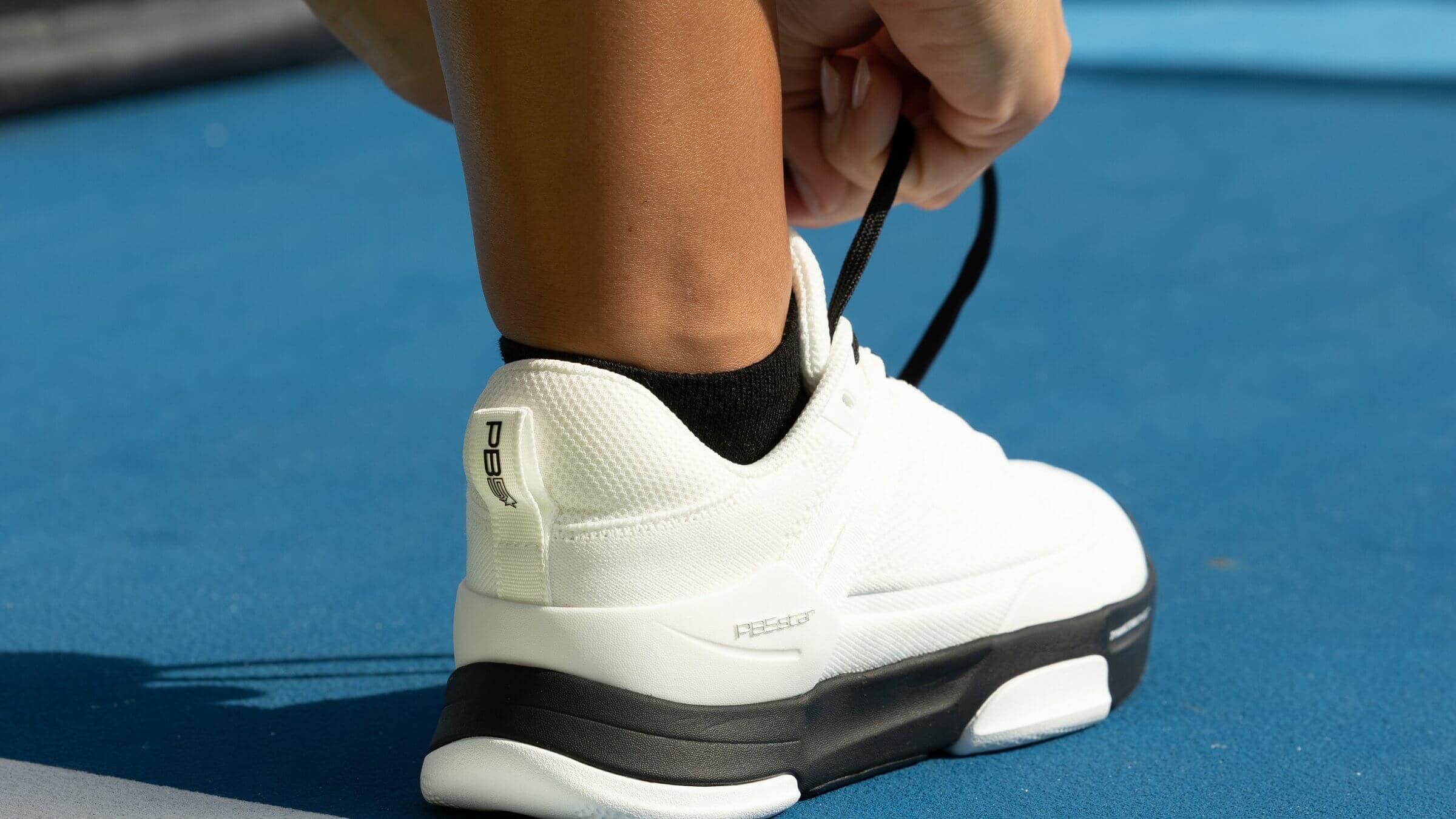
Fit sounds like a comfort question. On a court, it's a mechanics question. When the foot drifts inside the shoe, even a few millimeters, the kinetic chain from foot to floor breaks down: cuts lose their edge, push-offs lose their snap, and players start compensating in ways that cost both control and stamina over a long session. Lacing and upper construction measurably change how pressure distributes and how stable a shoe feels under dynamic movement. PB5star's Dynamic Stability Assist is built around exactly this principle, keeping the foot centered so every movement stays predictable.
Heel hold, midfoot lockdown, and toe room have to work as a system. When one piece is off, players tend to compensate, which costs both comfort and control over a long session. Sole construction interacts with balance in ways that show up most when sensory feedback is taxed, which is precisely what happens during fast lateral exchanges. The smartest way to judge fit is to make a few lateral moves and stops before committing to a shoe, because what feels fine standing still can feel loose the moment the match speeds up. PB5star's sizing and fit guide is a good starting point for getting that baseline right.
Choose for Movement, Then Check the PB5star Collection
Most players won't realize their shoes are working against them until a cut slips, a heel shifts, or their feet give out before the match does. That's the moment all of this matters: lateral support, controlled braking, a secure fit, and comfort that holds through a full session aren't optional features; they're what separates a court shoe from a shoe worn on a court. Footwear matched to movement demands reduces injury risk more reliably than brand preference or general category alone. A shoe built for straight-line running simply cannot replicate the side-to-side containment and braking control that court play requires.
Our court shoes are built around the exact patterns covered here: the cuts, stops, and directional shifts that define pickleball, tennis, and padel. For a closer look at the design thinking, read the Axis shoe story. If you want footwear designed around how you actually move, browse the PB5star court footwear collection and find the right fit for your game.
FAQs
How do court shoes compare to running shoes or cross-trainers for court sports?
Running shoes are built for forward momentum. Court sports demand side-to-side cuts, hard stops, and quick recoveries. A running shoe's cushioned sole supports forward stride well, but that same softness and flexibility work against you during lateral cuts and sudden changes of direction.
How can I tell if a shoe has enough grip without feeling too sticky?
Pivot and push off on the same surface you'll actually play on. A good court grip lets you start and stop with confidence without your foot catching abruptly. If the shoe feels like it's pulling at your foot rather than supporting it, the outsole compound may be too aggressive for that surface.
Which fit checks matter most before wearing new court shoes in a league match?
Try the shoe, then take a few sharp lateral steps and a hard stop. Your heel should stay locked, and your toes should have room to spread. Any foot shifting inside the shoe at that point signals the fit won't hold up once the pace picks up.
Does the court surface affect which shoe I should choose?
Yes, court surface affects both traction performance and how quickly your outsole wears down. Hard indoor courts work well with a durable, flatter outsole pattern, while outdoor courts with more texture wear through softer soles faster. Matching your outsole to the surface keeps your traction consistent and extends the life of your shoes.