Key Takeaways:
Recovery slides are the better pick right after a match because they give tired court feet the cushioning, arch structure, and stable underfoot contact that regular sandals usually do not.
Sandals make more sense once the recovery window passes, since adjustable straps, airflow, and casual versatility suit longer wear better than recovery-focused slides.
The smartest gear move is to treat slides and sandals as two tools in one routine: use slides for short post-play relief, then switch to sandals when the rest of the day demands more mobility and wear time.
Two pairs of open footwear can look nearly identical sitting next to your court bag. Slip them on after a hard pickleball session, and within twenty minutes your feet will tell you they are not the same thing at all. That gap in feel is not a coincidence. It comes down to what each type of footwear was actually built to do, and casual sandals have been proven to change gait mechanics and joint loading in ways that engineered recovery footwear simply does not.
For court-sport athletes, recovery slides and sandals have overlapping aesthetics but entirely different purposes. Recovery slides are a post-play tool, built around cushioning and underfoot support to help tired feet manage the fatigue from repeated lateral cuts, braking, and hard-surface impact. Sandals are better suited to the rest of the day, when breathability and versatility matter more than structured relief. The gap between them is not a matter of degree — it is a matter of what each was built to do, and that distinction compounds across a full season. PB5 builds for both.
Which Is Better After Pickleball: Recovery Slides or Sandals?
Recovery slides are the better option after pickleball, and timing is the whole reason. When you step off the court, your feet have absorbed hours of hard stops, lateral cuts, and repeated ground impact. What they need next is not just openness — it is purposeful cushioning and support. That distinction separates recovery slides from regular sandals in ways that matter most in the first hour after play.
Why Recovery Slides Win Right After a Match
Pickleball demands constant braking and direction changes, leaving feet genuinely fatigued at a tissue level. Recovery slides are built specifically around that window. Their engineered footbeds deliver soft, consistent underfoot contact designed to reduce tension and ease that post-match heaviness. Research supports the logic: supportive cushioned footwear used immediately after activity can meaningfully reduce first-step pain and foot sensitivity. That is a feature most casual sandals are simply not built to provide.
Where Regular Sandals Fall Short Post-Match
Sandals feel lighter and more open, which is part of their appeal. But that relaxed, flexible construction prioritizes versatility over recovery. Midsole cushioning changes how impact energy travels through the foot and affects how muscles and joints respond after play. A flat or minimally cushioned sandal outsole does not offer the same absorption. For tired feet, that difference is noticeable within minutes of slipping them on.
Match the Footwear to the Moment
Recovery slides are built for a specific job, and sandals are built for a different one. After play, reach for recovery slides. Once the recovery window passes and the day shifts to errands, travel, or time with friends, sandals earn their place through adjustability, airflow, and casual versatility. Treating them as two separate tools, not competitors, is how serious players get the most from both.

What Makes Recovery Slides Better for Post-Match Foot Comfort Than Regular Sandals?
The difference comes down to design intent. A recovery slide is built from the ground up to address what happens to your feet after repeated lateral cuts, hard braking, and sustained impact on a court surface. A casual sandal is built for openness and versatility. Both are valid, but they're solving different problems.
Here's what sets recovery slides apart in that first hour after a match:
Step-in ease with a cushioned platform. Recovery slides are made to slip on without effort and deliver immediate softness underfoot, which matters when your feet feel beat up from a session of hard starts and stops. Softer, energy-absorbing constructions can reduce mechanical demand on the lower extremities after repetitive impact, something a flat or minimally padded sandal simply doesn't offer.
One-piece, continuous underfoot construction. Most recovery slides use a single molded platform that gives your foot consistent contact from heel to toe. Casual sandals often have segmented or flat footbeds that don't support the full surface of a tired foot the same way. Continuous, thicker midsoles help manage plantar pressure more evenly than thinner, broken-up designs.
Heel cup and arch geometry built for recovery. A well-designed recovery slide typically includes a heel cup and a contoured footbed that cradles the foot rather than leaving it flat. As PB5's recovery footwear guidance notes, features like deep heel cups and arch support work together to ease post-match pressure on the structures that take the most punishment during court play.
Stable contact when fatigue sets in. Tired feet move differently. After a hard match, your stabilizing muscles are less responsive, and that's exactly when you want a shoe that keeps your foot centered and supported. Recovery slides provide that stable contact point; most casual sandals prioritize airflow and style over this kind of structural hold.
Recovery-focused timing advantage. The post-activity window is when the right footwear does its most useful work, helping reduce fatigue and support circulation as the body transitions out of exertion. Sandals can feel comfortable in a general sense, but that's different from being built to actively support that recovery window.
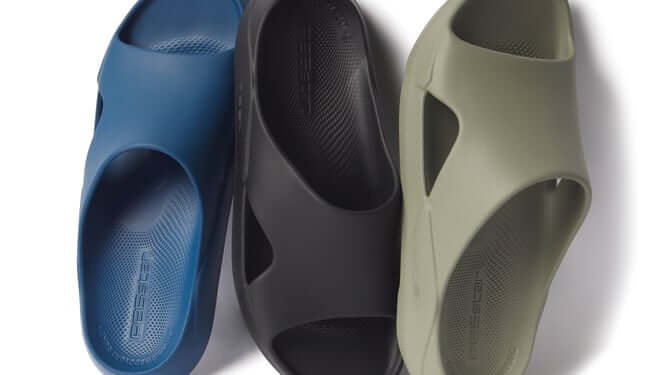
Our recovery slides collection applies these same principles, with cushioned footbeds and ergonomic design shaped around what court athletes actually need when the match ends.
Men's Recovery Slide, PB5 Après Sport | Black
$65.00
The Light-weight, Mid-Density injection molded PB5 Aprés Sport Slide is engineered to provide alignment, support and comfort. Experience our Dynamic Recovery Seat™ technology - a deep heel-cup that works in tandem with the Arch-Support, Met-Dome and Toe-bar to ensure your… view

How Recovery Slides and Sandals Compare for Arch Support and Cushioning
Not all footwear that looks casual performs the same way underfoot, and that gap becomes most apparent when tired feet need actual support. Cushioning depth, footbed contour, and platform stability vary widely across categories, meaning the choice between a recovery slide and a sandal is a structural decision, not just a comfort preference.
Footwear Type | Cushioning Feel | Arch Support Feel | Stability After Play | Best Use Case
|
|---|---|---|---|---|
Recovery Slides | Plush, high-rebound; engineered for soft, even underfoot contact | Contoured footbed with built-in arch shaping (e.g., 2° arch support, met-dome) | High; deep heel cup limits foot shift during rest | Post-match recovery window |
Sport Sandals | Moderate; thicker midsoles than casual options | Varies; some include molded arch, others minimal | Moderate; adjustable straps add security | Active casual wear, light errands after play |
Casual Sandals | Light to moderate; comfort-oriented but not recovery-focused | Low to moderate; footbed shaping inconsistent across styles | Low to moderate; less structured platform | All-day casual, social, travel |
Flat Minimal Sandals | Minimal; thin sole with little energy absorption | Little to none; flat platform offers no meaningful arch contour | Low; foot moves freely, little lateral stability | Short-duration casual wear on non-demanding surfaces |
Recovery slides lead on cushioning depth and arch structure because they are purpose-built for that job, while sandals range from moderately supportive to nearly flat depending on the design.
Recovery Slides for Short Recovery, Sandals for Longer Casual Wear
The question of whether sandals are a better choice than recovery slides for all-day casual wear doesn't have a single yes or no answer. It depends entirely on what your day looks like after you leave the court. These two footwear types serve different time windows, and treating them that way makes both work better for you.
Why Recovery Slides Work Best Right After Play
Recovery slides earn their place in the first hour or two after a session. The cushioned platform helps tired feet decompress after repeated hard-court impacts. Recovery footwear supports circulation and provides relief after physical stress, making that short post-match window their strongest use case.
Where Sandals Pull Ahead for the Rest of the Day
Once recovery time shifts into errands, travel, or social plans, sandals tend to be the more practical choice. Adjustable straps give a more secure fit across different activities. Better airflow keeps feet comfortable over longer stretches. According to Brown Health, board-certified podiatrists point out that recovery-focused footwear has real limits for extended all-day wear, where adjustability and security matter more.
The Practical Approach for Serious Players
Clinically sound footwear design should match the demands placed on the foot. For court players, that means one pair doesn't need to do everything. Slides right after play, sandals when the day opens up. One pair does not need to do everything.
Choose Recovery Footwear Like You Choose Court Shoes
A recovery slide built with a deep heel cup, arch support, and a met dome is doing something fundamentally different from a casual sandal, and your feet register that difference within the first twenty minutes of wearing each one.
Two pairs, two jobs. Our court footwear collection pairs a court shoe engineered for the braking, pivoting, and directional demands of court sports with a recovery slide designed for pre- and post-game tension relief. Explore the full range at PB5.
FAQs
Can recovery slides replace sandals completely if comfort is the main priority?
Not quite. Recovery slides are purpose-built for the window right after play, when feet are fatigued and need soft, stable contact. For longer stretches of walking, running errands, or traveling, sandals with adjustable straps usually offer more security and versatility. They each serve a different part of the day well.
Are sandals ever the better pick immediately after a match?
It depends on the sandal. Thicker, multi-density sole designs reduce impact loading compared to flat, minimal styles. A well-cushioned sport sandal can work post-match, but most casual sandals are not built around the underfoot softness that tired court feet respond to best.
Does wearing flat sandals after a match affect recovery?
It can. Thong-style flip-flops change stride mechanics and can lead to soreness higher up the kinetic chain. After the lateral demands of pickleball or padel, that altered gait pattern can quietly work against recovery rather than support it.
What should pickleball players look for in recovery footwear if they already have strong court shoes?
Look for features that do the opposite of your court shoe. A deep heel cup, meaningful arch support, and a cushioned platform that spreads pressure evenly are the right starting points. Our recovery slide technology includes a met-dome, toe-bar, and load-distributing groove. Each of those features is designed to release the tension that builds during play, which a flat sandal footbed simply cannot replicate.