Key Takeaways:
Proper men's pickleball shoes offer superior lateral stability, court-specific traction, and responsive cushioning, key features that enhance performance and reduce injury risk.
A systematic fit and sizing process, including foot measurement and on-court movement tests, ensures maximum comfort and support during aggressive play.
Dedicated pickleball shoes outperform tennis, running, and cross-training shoes by addressing the sport's unique biomechanical demands, making them essential for regular or competitive players.
Your footwork wins or loses close points in competitive play, and your shoes control every cut, plant, and recovery. The wrong pair creates slips during aggressive lateral moves and hot spots during long matches. The right pair transforms your court coverage and confidence in tight rallies.
But choosing the right pair isn't guesswork. This men's pickleball shoe buying guide covers the performance features that matter most, a proven fit process for consistent comfort, and key differences between pickleball and tennis models. You'll also find answers to common questions about materials, durability, and when to upgrade.
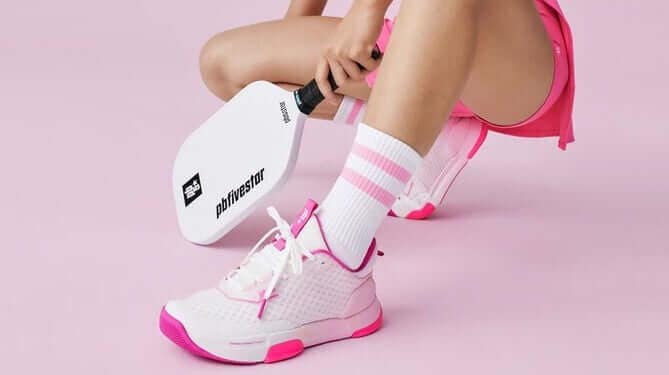
PB5 offers court shoes engineered for the quick cuts and lateral stability that pickleball demands.
Why the Right Shoes Matter in Pickleball
The right shoes matter in pickleball because the sport places unique demands on your feet, ankles, and lower body. Unlike running, which moves mostly forward, pickleball requires quick side steps, sudden stops, split-steps, pivots, and short explosive movements in every direction. Your shoes need to support those movements without sliding, twisting, or slowing you down.
Running shoes may feel cushioned and lightweight, but they are designed for heel-to-toe motion, not hard lateral cuts. That extra softness can make your foot feel unstable when you plant or push off sideways. Cross-training shoes offer more stability than running shoes, but they are usually built for gym movements rather than textured outdoor or indoor court surfaces.
Tennis shoes can work for casual pickleball because they are also made for court movement, but they may feel heavier or more structured than some players prefer. Pickleball-specific shoes are designed around the shorter rallies, faster resets, and frequent directional changes that define the game. For players who compete regularly, play multiple times per week, or want better court confidence, dedicated pickleball shoes provide the best mix of grip, stability, durability, and comfort.

What to Consider When Choosing Men’s Pickleball Shoes
The best pickleball shoes should match how often you play, where you play, and how your feet move during quick rallies. Before choosing a pair, consider these key factors:
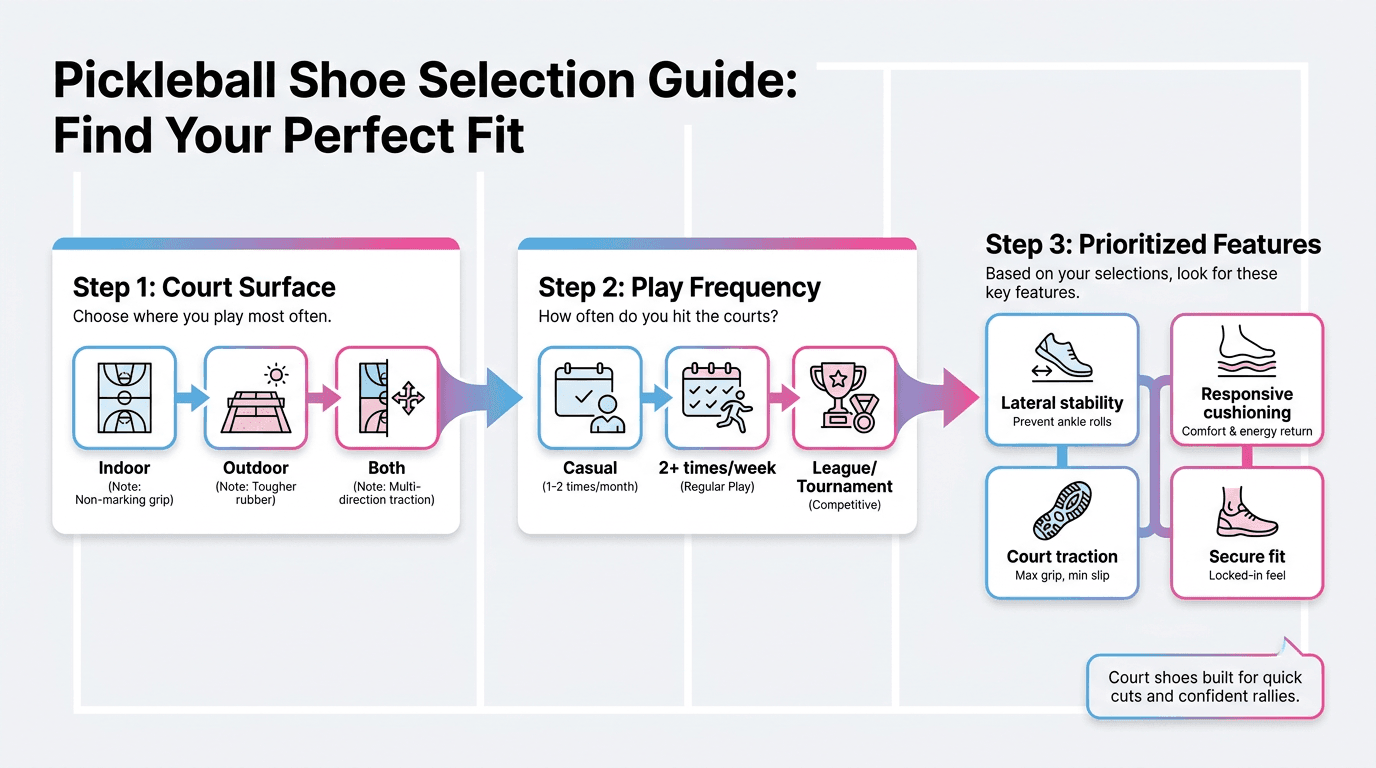
Court surface: Indoor and outdoor courts influence traction, outsole durability, and overall feel. Indoor players need a dependable non‑marking grip, while outdoor players benefit from tougher rubber built for more abrasive acrylic or concrete‑style surfaces.
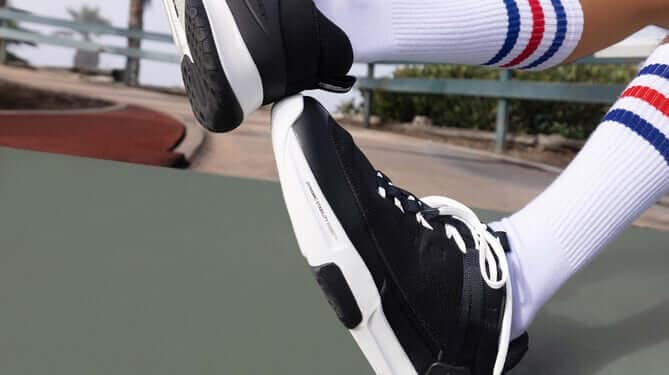
Lateral support: Pickleball involves constant side‑to‑side movement, so look for reinforced sidewalls, structured uppers, and a stable base that helps reduce foot rollover. Models like PB5star Court2 and Axis use an aligned underfoot platform with a deep heel seat and supportive arch design to keep your foot centered during hard cuts.
Traction pattern: Choose shoes with court‑ready grip, such as herringbone or modified chevron patterns, to support quick stops, pivots, and multi‑directional movement. Court‑specific rubber compounds are engineered to work with painted indoor courts and textured outdoor surfaces more effectively than running‑style tread.
Cushioning and court feel: A responsive midsole should protect your joints without making the shoe feel too soft or unstable during fast exchanges. PB5star’s court platform, used in Court2 and Axis, is tuned to stay low to the ground while still giving enough cushioning for longer sessions.
Fit and width: Your shoes should feel secure through the heel and midfoot while giving your toes enough room to spread naturally. Look for clear width options if you have a broader forefoot or notice your foot spilling over the sole during side‑to‑side moves.
Durability: Regular players should look for abrasion‑resistant materials, reinforced toe areas, and outsoles designed to handle frequent play. If you tend to drag your toe or slide into shots, prioritize toe and forefoot protection.
Weight: Lightweight shoes can help with quickness, but they still need enough structure for safe lateral movement. Performance shoes like Court2 balance secure containment with weight savings; more flexible options like Axis lean into a softer upper feel without sacrificing the underfoot platform.
Playing frequency: If you play several times per week, join leagues, or train for tournaments, a more structured performance model such as PB5star Court2 makes sense. It’s built to handle higher training volume and aggressive movement. If you play 1–4 times a month, mostly social or community games, you can benefit from the same aligned platform in a slightly softer package, such as PB5star Axis, which keeps the stability underfoot but uses a more flexible, breathable upper.
Foot type and support needs: Consider how much arch support you need and whether you use orthotics. Shoes built on a well‑defined court platform with a deep heel seat can help center the foot and support consistent alignment during lateral movement.
Indoor vs. Outdoor Pickleball Shoes
Indoor and outdoor pickleball shoes serve the same purpose, but the right choice depends on the court surface you play on most often.
Indoor: Smoother indoor courts call for non‑marking rubber outsoles and traction patterns that grip without feeling sticky. A lower‑profile design helps you react quickly at the kitchen and around the mid‑court.
Outdoor: Outdoor acrylic and concrete‑style courts are more abrasive, so outsole toughness and toe reinforcement matter more. Look for rubber compounds and tread patterns specifically described as “court” or “pickleball/tennis” rather than generic training rubber.
If you play on both indoor and outdoor courts, a court-specific pickleball shoe with multi-directional traction is usually the most practical option. The goal is to find a pair that gives you enough grip for quick stops, enough durability for rougher surfaces, and enough support for repeated side-to-side movement.
Men's Pickleball Court Shoes, PB5 Axis | Steel Multi
$129.00
The PB5 Axis is built for players who choose their gear as carefully as they choose their court time. At the heart of every PB5star shoe is our contoured footbed, a deep heel seat, engineered arch cushioning and met-dome -… view

Features That Matter Most in Men's Pickleball Shoes
When players ask what features they should look for in men's pickleball shoes, the answer comes down to three performance pillars that separate court-ready footwear from general athletic shoes. Your feet experience rapid direction changes, explosive starts, and sudden stops during competitive play. The right shoe construction handles these demands while keeping you comfortable through long matches and tournament days.
Let's break down the specific elements that make the difference between winning and losing those close points.
Lateral Stability: Your Foundation for Quick Cuts
Pickleball demands aggressive side-to-side movement that can stress your feet and ankles. A firm sidewall construction, reinforced midfoot shank, and structured upper work together to prevent foot rollover during hard cuts. Biomechanical evidence confirms that sole material properties and upper design features directly impact lateral stability. Our shoe technology incorporates Dynamic Stability Assist and a structured heel to keep your foot centered during multi-directional play.
Court-Ready Traction: Grip That Performs
Running shoe treads slip on painted pickleball courts, while tennis shoes often wear too quickly on textured acrylic surfaces. Look for durable rubber compounds with herringbone or modified chevron patterns that grip both surface types effectively. Clinical findings demonstrate that proper traction works with lateral reinforcement to optimize cutting biomechanics. The PB5 Court2 features multi-directional rubber pods designed specifically for racquet sports traction needs.
Responsive Cushioning: Feel the Court, Protect Your Body
The sweet spot between cushioning and court feel comes from a responsive midsole with a low-to-ground ride. Too much padding delays your reaction time, while insufficient cushioning leads to fatigue and potential injury. Laboratory testing reveals that strategic midfoot stiffness reduces harmful foot motion without sacrificing performance. Our men's court shoes balance responsive cores with stable construction for quick first steps and lasting comfort.
How To Find the Right Fit and Sizing
Getting the right fit determines whether your shoes support aggressive play or hold you back during competitive matches. A systematic approach saves time and prevents costly mistakes.
Three proven steps answer this question and work for players at every level.
Measure both feet in the evening when they're at their largest size, fitting to your larger foot with a thumb-width space at the toe
Remove stock insoles if using orthotics and go up 1/4 to 1/2 size to prevent cramped toe area and heel lift issues
Test lateral shuffles, split-steps, and hard plants for 55 seconds to check for hot spots or heel slip
Choose width based on how your foot widens during movement, selecting 2E if your foot spills over a D-width sole
Confirm zero heel movement during quick direction changes, as any slip reduces court control
A proper fit feels secure without pressure points and allows natural foot movement during play. These steps mirror the fitting principles used by footwear specialists. They also align with our sizing recommendations for court sports.
Next Steps: Gear Up With Confidence
The right men's pickleball shoes transform your court performance through targeted lateral support, responsive traction patterns, and precise fit protocols. Sports biomechanics research confirms that court-specific footwear design directly impacts quick cuts, braking efficiency, and injury prevention during multi-directional play.
Beyond individual performance, the right shoes become a strategic advantage in close matches. Tournament regulations require non-marking soles for court safety, while proper fit and materials support the aggressive movements that separate winning points from missed opportunities. Connect with fellow players through pickleball groups, share gear insights, and refine your strategic gameplay.
Ready to upgrade your court performance? Explore PB5 Court Footwear engineered for the demands of competitive pickleball.
FAQs
Which materials offer the best support and comfort in men's pickleball footwear?
Look for structured knit uppers with TPU reinforcements around the midfoot and heel. Premium abrasion-resistant rubber outsoles provide durability while maintaining court feel. Breathable mesh panels keep feet cool during long matches.
How long should a pair of men's pickleball shoes last for league play?
Expect 50-60 hours of court time before midsole support degrades significantly, according to athletic footwear research. For league players practicing twice weekly plus matches, this translates to 4-6 months. Outsole wear varies by court surface and playing style. Replace shoes when you notice reduced lateral stability or visible tread wear.
Can I wear tennis shoes for pickleball, and when does a dedicated pickleball model make more sense?
Tennis shoes work for recreational play but lack pickleball-specific features like optimized heel drop and court-surface traction patterns. Dedicated pickleball shoes become necessary when you play 2+ times weekly or compete in leagues. The injury risk from inadequate lateral support increases with rising pickleball participation, especially for players over 40.
What's the difference between men's and women's pickleball shoe construction?
Men's models feature wider toe boxes, different heel-to-forefoot ratios, and firmer midsole densities to accommodate higher body weights and different gait patterns. The heel drop and arch support positioning also differ. Always choose gender-specific sizing for proper biomechanical alignment and injury prevention.
When should I replace my pickleball shoes even if they look fine?
Replace shoes when you feel less responsive push-off, notice foot fatigue earlier in matches, or experience any new joint discomfort. Midsole compression occurs before visible wear appears. Listen to your body over visual cues.