
Key Takeaways:
A college club lasts when leaders bring more than enthusiasm: a simple constitution, clear officer roles, an advisor, and a basic budget make campus approval and long-term operation much easier.
Reliable attendance starts with a repeatable practice setup, including a consistent court slot, a compact gear system, correctly marked courts, and court-specific footwear that supports the lateral movement pickleball demands.
The clubs that keep members coming back make the first session easy for beginners, then add ladders, round robins, and internal tournaments so casual interest can grow into real campus competition.
Most college pickleball clubs start the same way: a sign-up sheet, a burst of enthusiasm, and a first session that fills every court. The fastest-growing sport on campus doesn't need a pitch. What it needs is a plan for week seven, when the early crowd has thinned, and the students who stayed are the ones who actually want a club.
A college pickleball club that lasts is built on a few things done consistently well: a smooth path through campus approval, courts that are ready when players show up, a culture that makes beginners feel like they belong, and competition that gives returning members something to work toward. This guide covers each of those pieces in order, from your first meeting with the student activities office to running your first round robin. When players are ready to commit to regular practice, PB5 has the court footwear built for the quick stops and lateral movement pickleball demands.
Get Campus Approval and Build a Simple Club Plan
Starting a college pickleball club is straightforward once you know what student activities offices actually want to see. Most campuses have a formal registration process, and the groups that move through it fastest are the ones that show up organized. Raw enthusiasm is a start, but a clear plan is what gets a club recognized.
Lead with a Plan, Not Just Passion
Student activities offices want to know that your club has a structure before they approve it. That means defining your purpose, identifying officer roles, and outlining how you will run meetings and practices. University recognition requirements often include a drafted constitution, a faculty or staff advisor, and proof that your group can sustain itself beyond a single semester. Putting those pieces together before you apply signals that this club is built to last, not just to fill a table at the activities fair.
Frame the Club to Appeal to Everyone
The strongest applications position the club as both social and competitive. A club that welcomes open play for beginners while offering structured match opportunities for more experienced players speaks to a wider campus audience. With around 125 colleges now running pickleball programs, there is real precedent to point to. Framing your club around community access and competitive growth gives the activities office a reason to say yes and gives future members a reason to show up.
Build Simple Systems Early
Credibility does not require a big budget or a perfect plan. An interest sign-up form, a shared practice calendar, and a basic budget covering court time, balls, loaner paddles, and entry fees for events are enough to get started. A sample constitution can help you get the governance language right, and our 7-step club launch guide walks through the practical steps in detail. Simple systems, applied consistently, are what turn an approved application into an active club.\
Set Up Courts and Gear for Regular Practices
Knowing what court setup and equipment you need for a college pickleball club to run regular practices is less complicated than most new leaders expect. The real goal is consistency: the same space, the same gear, and a setup routine fast enough to fit a student's schedule.
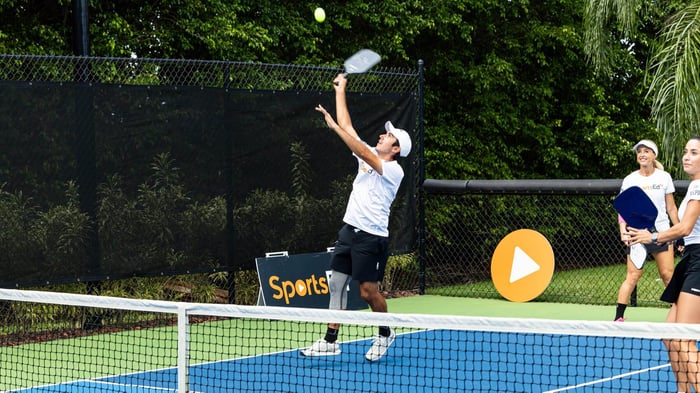
Lock in a repeatable court location early. Whether you reserve campus tennis courts and convert them with tape, claim gym floor time through campus rec, or apply for a dedicated outdoor space, a predictable location builds attendance. Students show up reliably when they know exactly where to go. The University of Arizona's campus rec model is a practical example: striped courts, consistent hours, and a paddle loan program require minimal overhead but create real routine.
Keep the equipment list short and stored smartly. According to Pickleball.com's school program guide, a basic program needs portable nets, a dozen or so balls, a small set of loaner paddles, and a system for tracking who has what. A rolling cart or a dedicated storage bin cuts setup time significantly, which matters when players have 30 minutes between classes.
Know the court dimensions before you tape anything. A standard pickleball court measures 20 by 44 feet, with a net height of 36 inches at the sidelines and 34 inches at the center, per USA Pickleball's court specs. Getting this right from the start saves frustration in practices and keeps the club credible if competition comes later.
Set up the net correctly and maintain it. A sagging or unstable net disrupts practice flow and signals a disorganized club to potential members. Our net setup guide walks through the steps and common fixes that keep things running without delays.
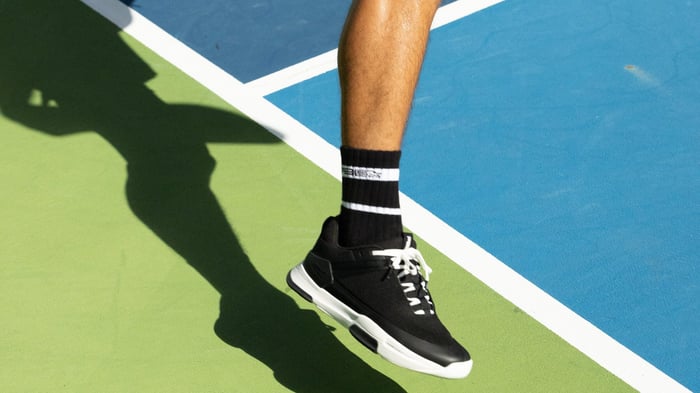
Treat court footwear as gear, not an afterthought. Pickleball requires quick lateral cuts, sudden stops, and short bursts in multiple directions, which is very different from jogging or playing basketball. Running shoes can slide or torque on a hard court surface, putting stress on ankles and knees. A court-specific shoe with lateral support and a non-marking sole gives players better stability from their first session, and that matters for both safety and confidence when someone is just learning the game.

Make Beginners Feel Welcome and Build Real Match Play
Retaining new members in a college pickleball club starts before the first rally. Players who feel confused or out of place in an early session rarely return, and no amount of social media promotion fixes a bad first impression. Welcoming beginners and keeping them coming back is a design problem, not a recruitment one.
Make the First Session Easy to Enter
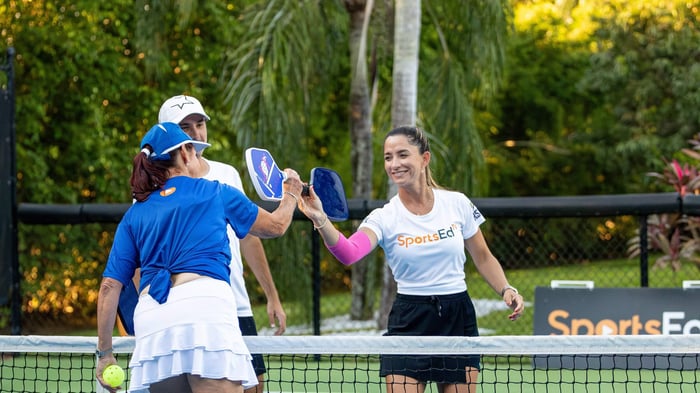
New members form their opinion of the club within the first 20 minutes. A quick visual rule explainer, a designated beginner court, and a simple rotation system prevent that overwhelmed feeling. Pairing newcomers with patient intermediate players removes the awkwardness of learning in public. Campus Rec Magazine highlights Learn-to-Play sessions and rotation-based open play as the most effective formats campus programs use to convert first-timers into regulars.
Mix Social and Competitive Formats
A club that only offers casual pickup loses players who want structure, and one that only runs drills loses players who came for community. Ladder games, themed open nights, and skill-grouped sessions give members of every level a reason to show up. Our beginner drill guide offers short, scalable exercises built for rotation-based club sessions, where players can see visible improvement from week to week.
Build Competition from the Club's Own Base
Round robins, challenge matches, and small internal tournaments give regular attendees something meaningful to work toward. That progression from casual play to structured competition is what turns attendance into team identity. A 2024 coalition of USA Pickleball, NIRSA, and other organizations created grants, equipment support, and a sanctioned competition calendar specifically to help campus clubs build exactly this kind of pathway.
Start Small, Stay Consistent, and Equip the Club to Grow
What separates a club still running in April from one that dissolved after midterms isn't the size of the founding group or the quality of the launch event. It's whether the structure made showing up feel worthwhile. Collegiate pickleball resources consistently point to consistency over scale: weekly meetups, clear beginner pathways, and competitive formats that grow only once attendance is steady, not before.
Get those three pieces right: easy to join, credible to compete in, and genuinely worth returning to, and the club develops its own identity, one that outlasts any founding officer. Our PB5 court shoes are built for the lateral movement and quick stops the game demands, for players who've decided to make practice a real part of their week.
FAQs
How many students do you need to start a college pickleball club?
Most student activities offices require between five and ten founding members to charter a new club. That said, you do not need a large group to get started. A small, committed core is more useful than a long list of casual sign-ups. Recruit people who will actually show up, then grow from there.
What should happen before the first official club meeting?
Before that first meeting, settle on an officer structure, draft a simple mission statement, and have a practice location in mind. Come prepared with a basic schedule and a contact form for new members. Walking in organized signals to both the campus administration and potential members that this club is worth their time.
How do you build match play and campus competition without pushing beginners away?
The key is sequencing. Start with open play formats that keep things low-pressure and rotation-based. As attendance steadies, introduce challenge matches and round robins on a separate track. Beginners stay engaged when competitive play is offered alongside, not instead of, casual sessions.
What gear matters most for regular club practices?
The non-negotiables are a portable net, a reliable set of balls suited to your court surface, and a few loaner paddles for new members. Our ball selection guide covers how surface type affects ball choice, which is worth knowing before your first practice.
Why does court footwear matter from day one?
Court shoes designed for pickleball give players the lateral grip and ankle support that running shoes cannot provide on a hard court surface; a real concern for beginners still learning to move confidently. For more on building that confidence from session one, see our pickleball beginner's guide.