
Key Takeaways:
Switching from court shoes to recovery slides within minutes after play is crucial for reducing foot strain and promoting faster recovery.
A structured, three-phase post-game routine, including cooldown, mobility work, and hydration, can be completed in under 20 minutes for optimal results.
Proper recovery footwear with arch support and cushioning is essential for preventing cumulative foot stress and maintaining peak performance.
The wrong footwear choices can reduce athletic performance, yet most players ignore their feet the moment they walk off the court. The fastest way to feel ready for your next match starts with a focused recovery window that begins the minute play ends. Court shoes handle performance demands during play, while recovery slides manage to reduce foot stress after matches.
This smart post-game recovery routine combines three time-boxed phases with strategic footwear switches. The approach reduces ongoing foot strain and speeds your return to peak performance. Our recovery slides work alongside targeted mobility used by pro players. Discover how PB5star court shoes and recovery slides create the perfect post-match partnership for serious competitors.
Your 3-phase post-game recovery routine (Time-boxed and practical)
The difference between feeling ready for tomorrow's match and struggling through your next session often comes down to what you do in the first 20 minutes after play ends. These complete post-game recovery routine steps are designed for competitive players who want maximum recovery benefit without wasting time on complicated protocols.
Phase 1: Cooldown (5-6 Minutes)
Start with a gentle walk around the court or facility for 3-5 minutes to gradually lower your heart rate. Avoiding abrupt stops after intense activity to prevent blood pooling and stiffness. Add 30-45 ankle pumps per foot while walking to promote circulation. Finish with slow arm circles and gentle neck rotations to release upper body tension from overhead shots and quick reactions. Once your heart rate stabilizes, shift focus to the areas that worked hardest during play.
Phase 2: Mobility and tissue care (5-4 Minutes)
Focus on your calf-Achilles complex with knee-bent stretches targeting the soleus, holding for 30-45 seconds per side. The repetitive forefoot loading from court sports means you should spend 20-30 seconds gently extending your big toe to counteract the forward pressure. Use your hands or a tennis ball for 60-90 seconds of light massage on each calf and the soles of your feet, focusing on any tension points from lateral movements and quick stops.
Phase 3: Recovery inputs (7-8 Minutes)
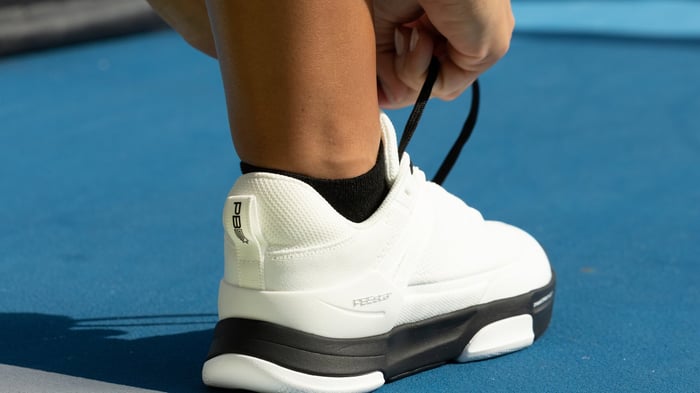
Switch out of your court shoes into recovery slides to offload your plantar fascia and provide arch support. Features like cushioning and arch support in footwear can significantly impact foot comfort and pain levels. Start structured rehydration with 16-20 ounces of water or an electrolyte drink. If you have compression gear, apply it now for 10-15 minutes. End with 5-6 deep breath cycles, focusing on longer exhales to activate your body's natural relaxation response and speed recovery.
Footwear synergy: Court shoes versus recovery slides
Your court shoes work overtime during matches, providing the lateral stability and grip needed for quick direction changes. Once the final point ends, keeping them on keeps their feet in the rigid support structure needed during play, when they should be shifting into recovery.
The biomechanics are straightforward. Here's how each type of footwear serves your recovery routine:
Court shoes lock your foot for lateral stability, but maintain tension in the plantar fascia after play ends
Recovery slides with structured arch support redistribute pressure away from stressed forefoot tissues
Cushioned midsoles in properly designed slides promote circulation while reducing impact on the calf-Achilles complex
Prompt footwear switching prevents cumulative loading that basic flip-flops cannot address
Footwear modifications with cushioning and arch support reduce vibration transmission to the Achilles tendon
Recovery slides and sandals support muscle repair by creating an immediate environment where stressed tissues can begin the healing process rather than remaining under performance-level tension. Making this footwear switch within minutes of finishing your match sets the foundation for everything else in your recovery routine.

Active recovery that works for pickleball players
Smart recovery starts with movement, not complete rest. The most effective post-game recovery techniques for pickleball players combine gentle circulation work with targeted mobility that prepares your body for the next session. Here are the evidence-based techniques that deliver results for competitive players who want to maintain their edge.
Walk and pump: 3-5 minutes easy walking plus 30-45 ankle pumps per side to boost blood flow back to your heart and reduce stiffness
Target the deep calf: Knee-bent calf stretches for 30-45 seconds, 2-3 rounds, to address the deep calf muscle that powers your next-day performance
Hold your big toe in extension: 20-30 seconds per side to restore forefoot mobility after lateral court movements
Massage briefly: 60-120 seconds of gentle foot and calf tissue work per side to address hotspots
Reset with breathing: 5-6 slow breath cycles with long exhales to help your body switch to recovery mode
This sequence takes 15-20 minutes and works whether you're cooling down from league play or a casual match. The key is consistency rather than intensity. As one pro player notes, light activity and targeted mobility form the foundation of effective recovery protocols. Pairing this routine with proper recovery footwear keeps you playing at your best.
Recover smarter, then play with confidence
Your feet handle intense lateral movement and repeated stops during competitive play. The three-phase routine gives you a structured way to transition from intense play to structured restoration in under 20 minutes. Switching from court shoes to recovery slides immediately after play reduces cumulative stress on your plantar fascia and helps your body reset faster.
Beyond the immediate benefits, smart recovery footwear for court sports makes the difference between maintaining peak performance consistency and compromising your competitive edge. Track how you feel at 24 and 48 hours after implementing this routine. Experience the performance advantage of our integrated court and post-game care system at PB5star.
FAQs
When should recovery slides go on, and how long should they stay on after a match?
Switch to recovery slides within 5-10 minutes after your final point. Your feet benefit most when you transition out of performance footwear quickly, allowing the plantar fascia and calf complex to decompress. Keep them on for at least 30-60 minutes post-match, or longer if you're socializing courtside. Our recovery slides provide structured arch support that continues working as long as you wear them.
Is active recovery better than complete rest after intense play?
Both work well, but light movement often feels better and fits naturally into your routine. Active and passive recovery produce similar long-term results, so choose based on your schedule and preferences. Most competitive players find that gentle walking and mobility work help them feel more prepared for the next session, even when recovery markers are comparable between methods.
How much and what should I drink in the first hour after finishing?
Aim for 16-24 ounces within the first 30 minutes, then continue based on thirst and sweat losses. Drinking about 150% of the body weight you lost during play. Water works for most sessions, but consider electrolyte drinks after intense matches or hot conditions. Our hydration guide covers specific amounts for different playing conditions.
Can I skip parts of the routine if I'm short on time?
Prioritize the footwear switch and hydration if you only have 5 minutes. These two steps provide the most immediate benefit with minimal time investment. Add the mobility work when your schedule allows, since consistent movement patterns matter more than perfect execution of every step. Even a shortened routine beats skipping recovery completely.
How long should the entire recovery routine take?
Plan for 15-20 minutes total if you want to complete all three phases properly. This timeframe allows adequate cooldown, mobility work, and transition into recovery mode without rushing. Competitive players who invest this time consistently report feeling more prepared for their next session and experiencing less residual soreness between matches.