Key Takeaways:
- Most pickleball ankle sprains start during braking and lateral recovery, and slick fall courts make those routine plants riskier by changing traction, contact timing, and ankle loading.
- Shorter recovery steps, a centered stance, and the discipline to leave low-control balls alone cut ankle risk more effectively on wet courts than stretching more after the fact.
- Court-specific shoes with secure heel hold, midfoot containment, multidirectional traction, and the right fit give players a steadier base than running shoes and help prevent the internal foot movement that leads to ankle rolling.
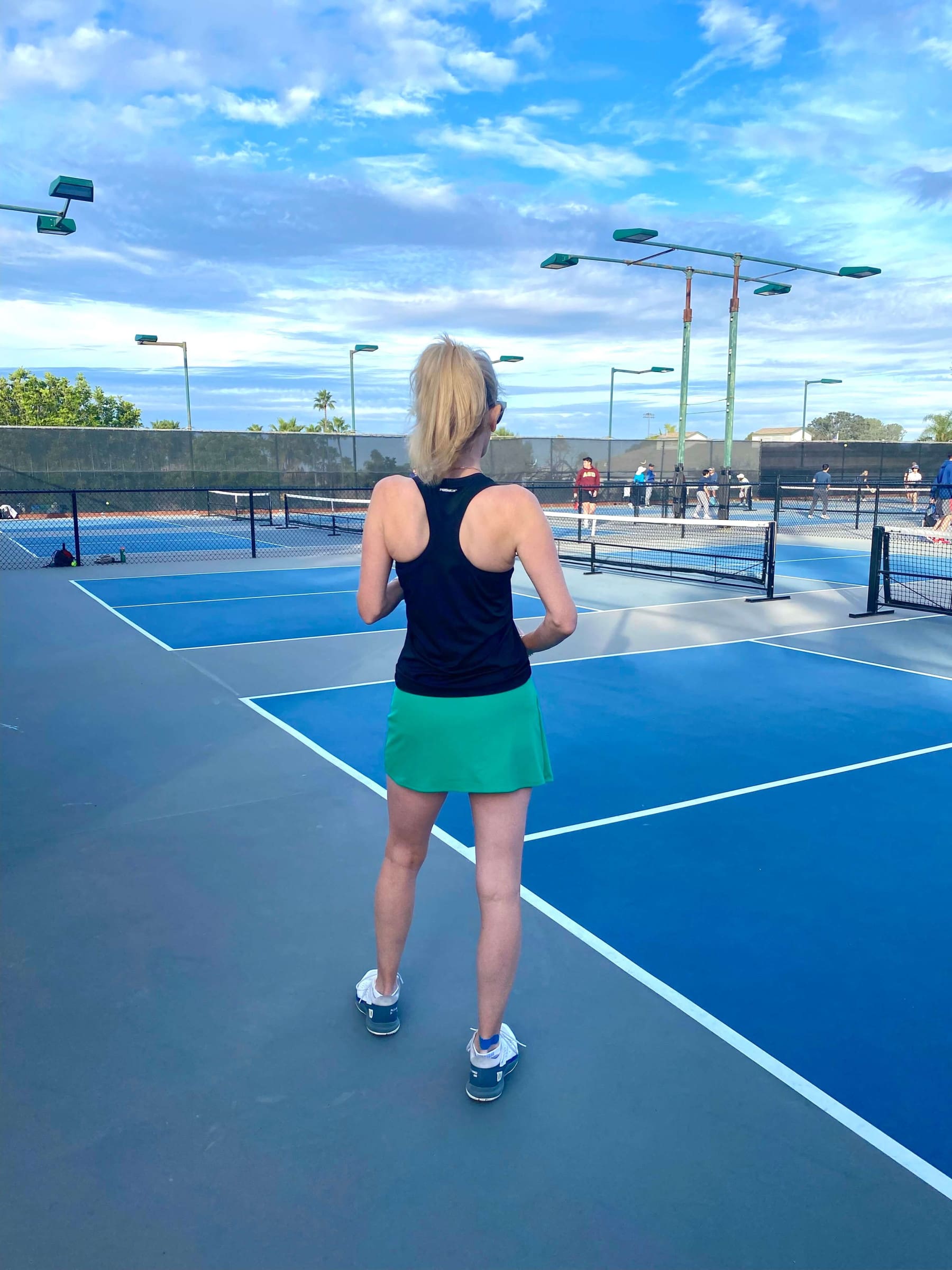
A lateral cut you've made hundreds of times feels routine, until the court is damp and it isn't. Wet leaves, morning dew, and cooler fall temperatures quietly reduce the grip between your shoe and the surface, and that shift changes how your foot plants and releases during every stop and direction change you make. Most players don't notice until something goes wrong.
Real pickleball ankle injury prevention starts earlier than most players expect: before the soreness, before the brace, and well before that first awkward plant on a wet court. What actually protects your ankle is understanding how quick stops, direction changes, and slick fall surfaces combine to spike ankle loading, then choosing footwear built to handle that stress. PB5 court shoes, backed by 30 years of biomechanical expertise, are designed for exactly that challenge.
Why Quick Stops Raise Ankle Risk on Fall Courts
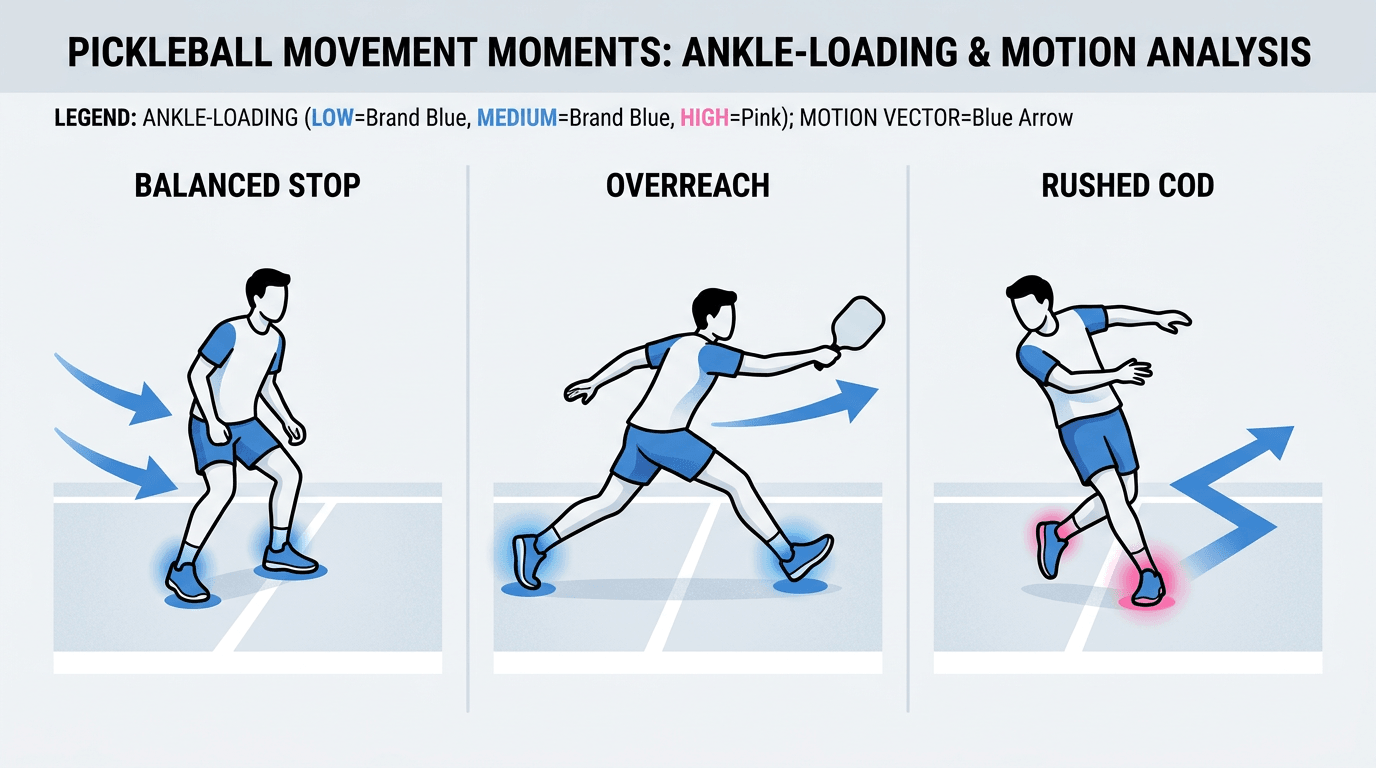
Quick stops and direction changes raise ankle injury risk in pickleball by forcing rapid inversion at foot strike, a loading spike that peaks during braking and becomes harder to control on slick fall surfaces. That mechanism is why an ordinary-looking cut can go wrong so quickly, and why fall courts, where surface grip is already reduced, compress the margin between a clean plant and a sprain.
Braking Is Where Ankles Take the Most Stress
Most ankle sprains don't happen during a steady run to the kitchen. They happen during braking and lateral recovery, when the foot plants fast and the body's weight shifts over it quickly. These stops create high-impact peaks and short loading windows that demand a lot from the lower leg in a very brief moment.
Slick Courts Change How and When You Plant
On a dry court, your foot grips and releases on a predictable schedule. On a wet or leaf-covered fall surface, that timing shifts. Players tend to plant harder or later than usual to compensate for reduced grip. A delayed or mistimed plant — common when grip is uncertain — pushes the ankle into that inverted position at ground contact more often.
Surface Friction Affects More Than Just Grip
Slick surfaces affect more than slip risk. Reduced surface friction changes the entire pressure pattern under your foot during a cut or stop. A BJSM study on court surfaces found that slippery surfaces alter contact time and plantar loading in ways that shift strain toward the ankle during lateral movements. Slick fall courts don't just feel different; they mechanically change how force moves through your foot.
Shorter Steps and a Centered Stance Lower the Risk
The correction is practical. Shortening your recovery steps, staying centered over your foot rather than reaching wide, and letting go of balls you can't control cleanly all reduce the chance of an awkward plant. Building these habits before conditions get slick pays off more than adjusting mid-game.
Choose Court Shoes That Limit Rolling And Strain
Running shoes are built for forward motion, and that design works directly against you in pickleball. A running shoe's flexible sole and narrow base are engineered to roll your foot forward efficiently — the exact opposite of what a lateral cut demands. When you plant sideways at speed, that flexible sole offers little resistance to inversion, and the narrow base provides less platform to arrest the roll.
The five features below reflect what the evidence on footwear safety for older adults and court traction performance consistently point toward for reducing ankle strain during lateral court movement.
| Shoe Feature | Why It Matters for Ankle Stability | What to Avoid | Best Fit for Slick Fall Courts
|
|---|---|---|---|
| Heel Counter | A firm, structured heel counter limits rearfoot movement and reduces the chance of the ankle rolling inward during a plant or stop | Soft, collapsible heel cups that let the foot shift inside the shoe | A rigid or semi-rigid counter with a low-profile fit that holds the heel without pressure points |
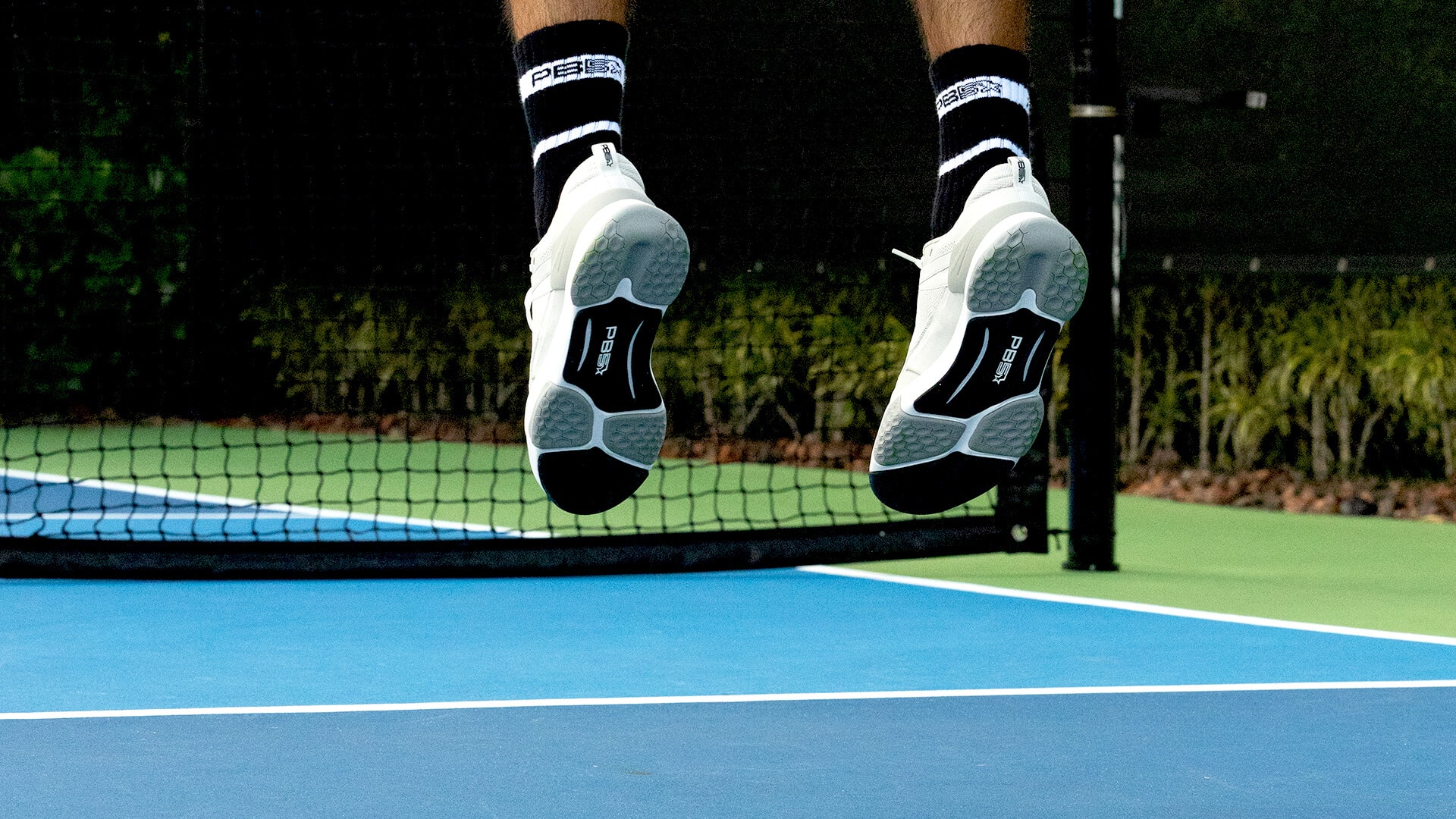
| Outsole Traction | Tread geometry channels surface contaminants and maintains grip during lateral cuts; herringbone and multi-directional patterns perform best on varied court surfaces | Flat or worn outsoles with minimal tread depth, and running-shoe outsoles not designed for lateral load | A rubber outsole with a multi-directional tread pattern rated for court sport movement |
| Midfoot Containment | A secure midfoot keeps the foot from sliding inside the shoe during direction changes, which is where internal instability compounds external surface risk | Flexible midfoot panels or soft overlays that allow the foot to shift laterally under load | A reinforced midfoot cage or supportive overlay that wraps the arch without restricting circulation |
| Forefoot Width | Enough room in the toe box allows natural toe spread during stops, which helps the foot distribute braking force more evenly | Narrow toe boxes that compress the forefoot and limit natural splay on impact | A width that allows the toes to spread slightly without creating excess space that permits sliding |
| Cushioning Balance | Moderate cushioning absorbs impact without creating an unstable, overly soft base that reduces ground-feel during quick changes of direction | Maximum-cushion soles that raise the foot's center of gravity and increase sway risk | A firm-to-moderate midsole that absorbs shock while keeping the foot close enough to the court surface to read traction changes |
Our pickleball foot injury guide covers why these principles matter in practice, because on a slick fall court, a stable base and a secure heel hold do far more for ankle protection than choosing the cushiest option on the shelf.
Dial In Shoe Fit Before The First Game
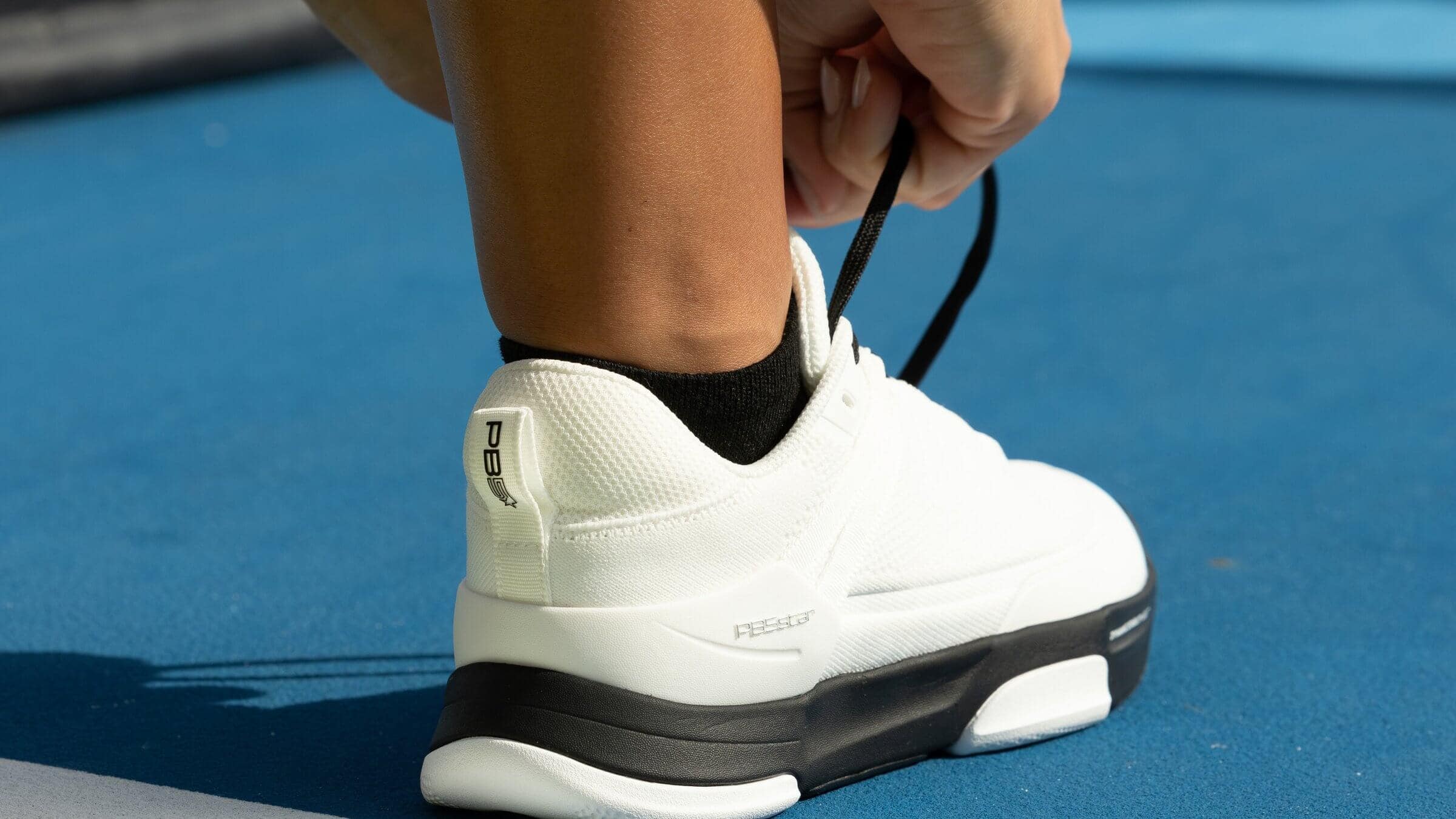
A shoe can have excellent outsole traction and still let you down if the fit is off. When the heel slips or the midfoot shifts inside the shoe, your ankle compensates with every step, and that internal movement is one of the quieter reasons ankle rolling happens on court. Proper shoe fit is a real line of defense against ankle instability, not just a comfort preference.
Here is what to check before you commit to a pair:
- Lock the heel first. Slide your foot forward in the shoe, then check that the heel counter holds snug with no lift when you walk. A heel that rides up even slightly will let the foot rock side to side inside the shoe during lateral cuts.
- Check midfoot security without squeezing the forefoot. Lace the shoe firmly through the midfoot eyelets, then wiggle your toes. If your toes feel pinched before the midfoot feels secure, the shoe is not the right shape for your foot.
- Leave room at the toe box. A thumb's width of space between your longest toe and the front of the shoe allows natural toe spread when you brake or push off. Our fit guide walks through this measurement so you can check it at home or in-store.
- Test with the socks you actually play in. Thin dress socks and thick sport socks change the fit enough to matter. Bring your game socks when trying on court shoes and check the fit as a complete system.
- Move before you decide. Standing comfort does not reveal how a shoe performs under load. Do a few lateral shuffles and a couple of stop-start steps. If the foot slides forward on deceleration or the ankle feels wobbly during a side shuffle, that shoe is not the right fit for court play.
- Revisit fit as your shoes age. Midsole cushioning compresses over time, heel counters soften, and the shoe's ability to contain your foot gradually decreases. If a pair that once felt secure has started to feel sloppy during cuts, it is worth checking whether the structure has broken down rather than assuming your ankle strength has changed.
Start Prevention With Movement And The Right Court Footwear
Protecting your ankles on slick fall courts comes down to two things working together: how you move and what's on your feet. With planting, lunging, and inversion being the most common injury mechanisms in pickleball, staying centered, shortening your recovery steps, and respecting the court conditions you're actually playing on reduces that risk before it becomes a problem.
Footwear is where that preparation becomes structural. Orthopedic specialists recommend court-specific shoes with lateral support over running shoes for exactly this reason, because the right shoe doesn't just react to an ankle rolling, it limits how far it can roll in the first place. The PB5 court footwear collection is built for the braking and side-to-side demands of court sports, and includes a recovery slide for before and after play. Find the shoe that keeps you on court this fall.
FAQs
Is stretching alone enough to protect ankles on slick fall courts?
Stretching helps, but it does not prepare the ankle for the braking and cutting that pickleball demands. A warm-up that includes movement rehearsal, like lateral shuffles and controlled stops, does more to lower ankle loading on slick surfaces than static stretching before play.
Should older players wear an ankle brace, or focus on court shoes and footwork first?
Court shoes and movement habits are the better starting point. A brace can add support after an injury, but it does not fix poor traction or a shoe that lets the foot shift internally. Building stability through footwear fit and footwork gives you a more reliable foundation than a brace worn over an unstable setup.
When should a player stop and reassess shoes, traction, or court conditions?
If you notice your foot sliding inside your shoe, feel unexpected ankle wobble during side shuffles, or spot wet patches or debris that cannot be cleared, those are signs to pause. Continuing play on a compromised surface or in a shoe that has lost its structure significantly raises the chance of a sprain.