
Key Takeaways:
- At 3.5 and 4.0, composure comes from a repeatable system, not willpower: a quick between-point routine, a one-line error reset, and simple rally cues you can trust when the score gets tight.
- A short routine like breathe, name, set builds real confidence because it gives you a job between points, cuts mental noise, and gets your body balanced before the next ball.
- Players make smarter choices under pressure when they default to high-margin targets and trust their footwork, braking, and balance to keep spacing and shot selection clean.
Most 3.5 and 4.0 players do not lose composure because they care too much. They lose it because they have no repeatable plan for what to do between points, after a mistake, or when the score tightens. The gap between a composed competitor and a rattled one is rarely talent. It is a habit.
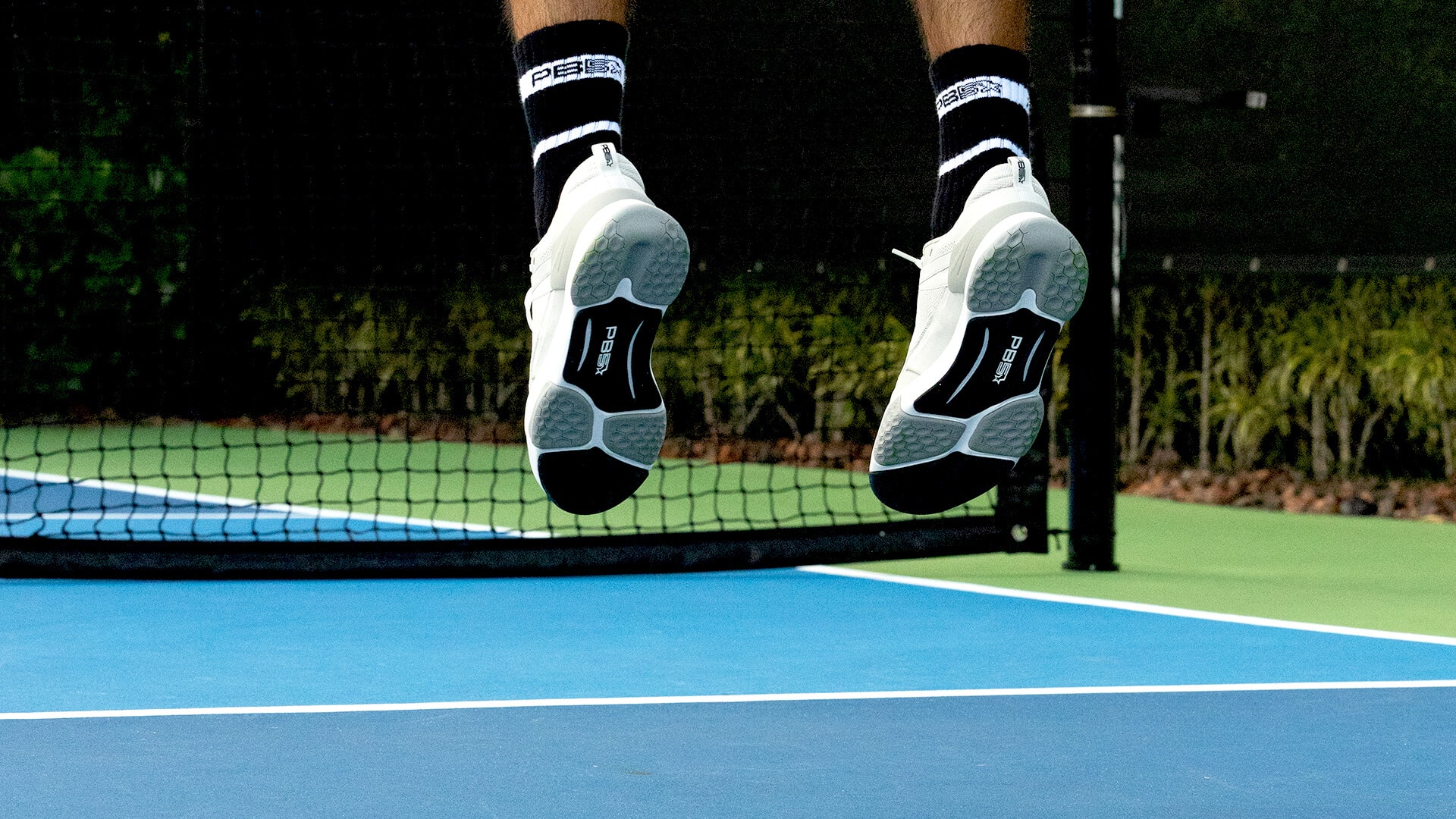
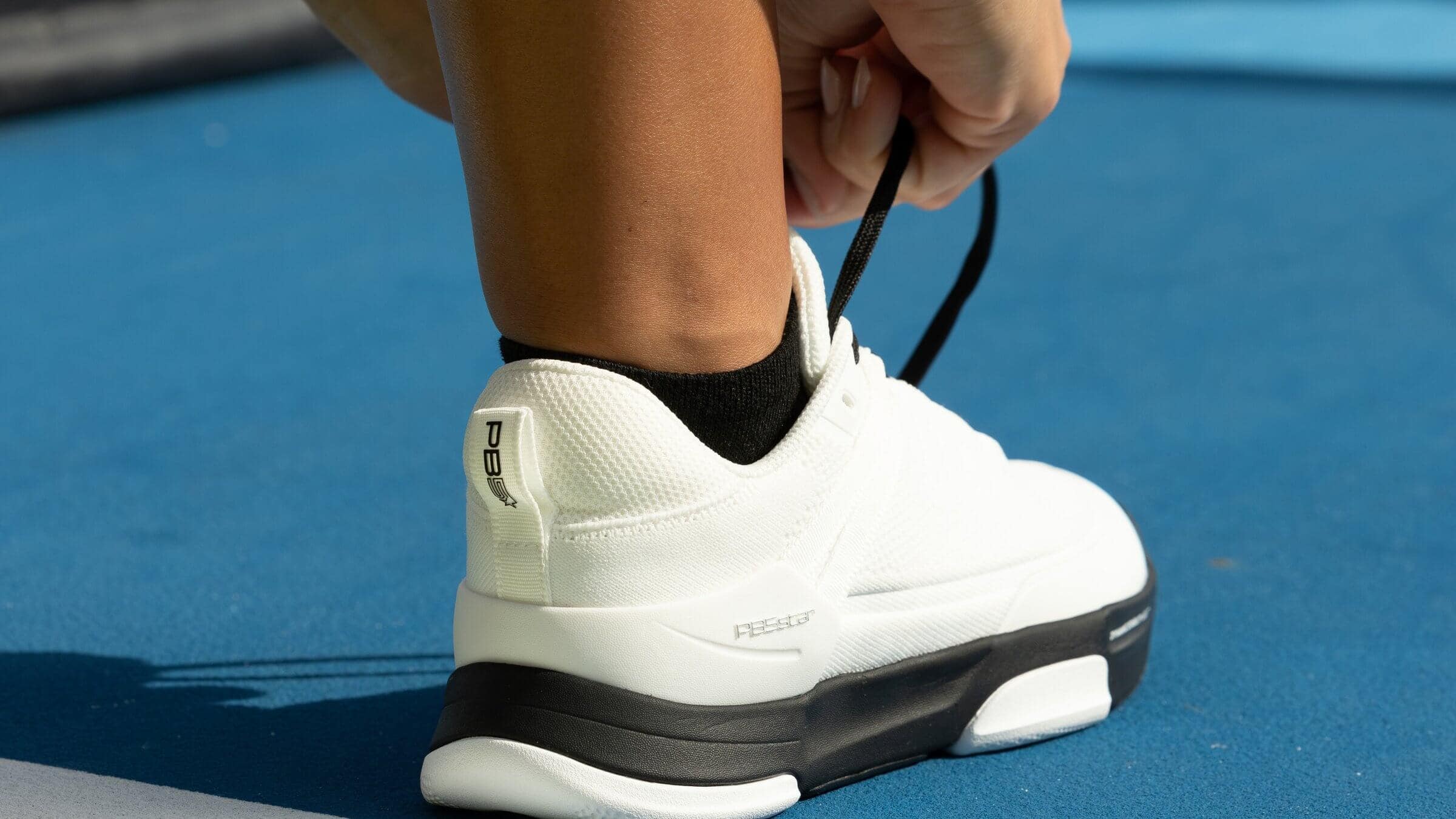
The best pickleball mental game tips are not about thinking calmer through willpower alone. They are about building a repeatable system: a between-point routine that keeps you steady, a one-line reset after errors, and movement you can count on when the rally speeds up. When your decisions are simple, and your body feels grounded, confidence is not something you chase — it is something you build. Movement is part of that system, which is why PB5 court footwear is grounded in biomechanical research: steady footing is where clear decisions start.

Build Confidence With a Between-Point Routine
Every point ends, and a new one begins. What you do in that five-second gap, before the serve, after a winner, right after a miss, determines more than most players realize. Between-point routine pickleball confidence is not a personality trait that some competitors are born with. It is a trainable skill, and the players who treat it that way are the ones who stay steady when the score does not.
Give Yourself Something to Do, Not Something to Feel
Emotional drift after a winner or a miss is normal. What separates steady competitors is having a concrete action that replaces the feeling. A structured routine gives your brain a task, which cuts the mental noise fast. Research from applied sport psychology supports this: consistent between-point routines that combine physical and mental cues help players manage pressure and let go of the previous point before the next one starts.
Keep the Routine Simple: Breathe, Name, Set
The routine that works best at 3.5 and 4.0 has three short steps: take one steady breath, name your next job (a return down the middle, a soft third shot drop), then set your feet before the serve or return. A 2025 peer-reviewed study found that combining brief mental rehearsal with controlled breathing measurably improved performance in racket-sport players. Simple and repeatable beats elaborate every time.
Body Control Makes the Routine Stick
The physical part of the routine matters as much as the mental part. Relaxed shoulders, a balanced stance, and one full exhale put your body in a state where good decisions come easier. Our court confidence guide breaks this down further, and the USTA's green-light routine framework reinforces the same idea: body-control steps like breathing and settling your feet are what make the mental reset real.
Reset Fast After an Unforced Error
The fastest way to reset quickly after an unforced error in pickleball is not to think more, it is to think less and more specifically. One missed third shot or a wide dink does not cost you the game. Replaying it in your head for the next three points often does. The goal is a short, complete reset that closes the last point and opens the next one cleanly.
- Label the error in one line, then move on. A correction like "higher margin" or "move earlier" names what happened without turning it into a story. A brief refocusing cue keeps attention on the next action rather than the last mistake.
- Avoid the replay loop. When you emotionally re-run a miss, your attention stays in the past while the game moves forward. Label it once, then redirect to the next serve, return, or third shot decision.
- Reset your body, not just your mind. Drop the shoulders, take one controlled exhale, and find a balanced, ready stance. Pursed-lip breathing slows your breath rate and helps quiet the physical tension that builds after an error.
- Lower your center of gravity before the next ball arrives. USA Pickleball's reset guidance points to stepping back and lowering your base as a way to regain control when a point is trending against you. Stable feet support clearer choices.
- Build the habit in practice so it holds under pressure. Confidence drills that include intentional error-and-reset sequences train your nervous system to treat mistakes as information, not emergencies.
One clean reset keeps a single mistake from becoming a three-point slide. That is the difference between a player who competes to the end of a game and one who mentally checks out at 8-5.
Use Simple Cues on Pressure Points and Rallies
Once you have a between-point routine and a fast error reset, the next layer is what happens inside a rally when the score tightens. Pressure makes your brain want to do more, think faster, and force plays. That impulse is exactly what costs points at 3.5 and 4.0. The right mental cues for competitive pickleball rallies work in the opposite direction: they simplify, not amplify.
Simpler is not a workaround for pressure. It is the right answer to it.
- Default to high margin. On pressure points, aim to the bigger target with a safe net clearance unless the ball genuinely sets up something more aggressive. One well-placed shot into a larger court zone beats one forced winner into the net every time.
- Use a three-part cue to slow the rally down in your head. "See ball, set feet, shape shot" keeps your attention moving in the right sequence and stops you from committing to a shot before you have read the ball.
- Trust your movement before you trust your shot. When spacing feels right and your feet are set before contact, better decisions follow naturally. Our confidence drills reinforce this connection between reliable footwork and cleaner shot selection.
- Keep your cues short and tactical, not motivational. A phrase like "middle, high margin" tells you what to do next. "Come on, stay focused" does not. Our pickleball coaching guide makes the same point: brief, task-specific cues outperform general self-talk when the score is close and the game is moving fast.
- Let braking and balance carry you through the transition zone. The kitchen and mid-court are where composure breaks down most for 3.5 and 4.0 players. When you know your footwork will hold, you stop rushing the shot. Reliable deceleration supports the same steady decision-making your routine builds between points.
Turn Composure Into a Repeatable Match Habit
Pickleball confidence under pressure builds point by point — through practice, not circumstance. Short preparatory routines of just 5 to 15 seconds reliably improve emotional regulation and performance under pressure when practiced consistently. A steady between-point reset, one clear correction after a mistake, and a simple rally cue are not three separate skills. They are one repeatable system that compounds across a full match.
Movement is part of that system, not a footnote to it. Court footwear measurably affects braking, traction, and change-of-direction performance, and players who trust their footing make calmer, cleaner decisions at the kitchen and in transition. The PB5 Court Footwear collection is built on 30 years of biomechanical research to deliver exactly that stability: the kind that holds when the score is close, the rally is fast, and your next step has to be the right one. When your body is grounded, the rest of your game follows.
FAQs
How do you reset quickly after an unforced error in pickleball?
The key is speed, not depth. A short physical trigger, like tapping your paddle or adjusting your grip, signals your brain to close the last point. Pair a cue word with that physical action to redirect attention before the next serve begins.
What between-point routine helps build confidence in competitive pickleball?
The most effective routine is one you can run in under five seconds, without thinking. Start with a single breath and one clear intention for the next point. Our pickleball mental game guide notes that a consistent pre-point ritual helps players shift from reacting emotionally to acting with purpose.
How can you stay calm on pressure points in a close pickleball match?
Slow your serve pace or take an extra beat before the return — that brief pause gives your nervous system time to settle before the next rally begins. Focus naturally narrows under pressure and causes players to rush, so a deliberate pause is one of the most practical tools available. Attention control and steady breathing to lower anxiety and make better decisions during high-pressure moments.
What mental cues help you make smarter decisions during competitive pickleball rallies?
Keep the cue tactical and short. Something like "see the gap" or "high margin" steers attention toward the shot rather than the scoreboard. Broad intentions like "stay calm" give the brain nowhere useful to go; task-specific cues give it a direction.